If you roll dough often, you need a dedicated surface that stays flat, releases dough easily, and cleans up quickly. This guide highlights the best silicone pastry mats that provide a smooth, nonstick rolling experience for bread, pie crusts, cookies, fondant, and more. Each option is chosen for stability, thickness, and ease of use, helping home bakers, beginners, and professional-like amateurs select the right mat for their workflow. The top picks are ideal for rolling dough, kneading, and shaping without excessive flour dusting.
| Product | Size | Best For |
|---|---|---|
| Folksy Super Kitchen Extra Large 28”×20” | 28″×20″ | Large dough sheets, fondant, sourdough |
| QUELLANCE Extra Large 28”×20” | 20″×28″ | Heavy rolling, bread and pizza dough |
| Folksy Super Kitchen Extra Large 36”×24” | 36″×24″ | Very large projects, rolling and sheet pan prep |
| Silicone Baking Mat 28″×20″ | 28″×20″ | General baking, fondant, pastries |
| QUELLANCE Large 16”×24” | 16″×24″ | Compact workspace, small rolling tasks |
Folksy Super Kitchen Extra Large Silicone Pastry Mat 28”×20”

Best for: Home bakers who need a wide, dependable surface for rolling large batches of dough or rolling fondant. This 0.7 mm thick mat offers a stable workspace with a nonstick surface that reduces flour dusting and cleanup. It’s particularly suitable for sourdough, pie crusts, and rolled cookies. Caution: ensure the mat remains flat on the counter to avoid slight curling at edges when handling extremely thin dough.
QUELLANCE Extra Large Silicone Pastry Dough Mat 28×20

Best for: Bakers who roll bread dough, pizza, or cookies and want a mat that resists warping. The 0.7 mm thickness is designed to prevent edge curling while delivering a sturdy rolling surface. It features a nonstick surface and a non-slip bottom to keep the mat in place. Limitation: heavier doughs may still require light flour or parchment for ultra-sticky mixtures.
Folksy Super Kitchen Extra Large Silicone Pastry Mat 36”×24”
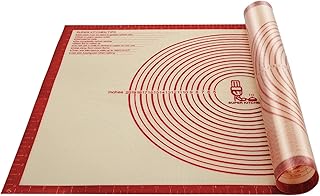
Best for: Serious bakers managing large batches or kitchen stations that need expansive rolling space. The 36″×24″ size mirrors large countertops, making it ideal for professional-like setups, rolling out pie tops, or preparing multiple dough sheets at once. Caution: ensure your workspace has clearance to accommodate the mat’s full width; flatten fully after use to prevent creasing.
QUELLANCE Large 16×24 Silicone Baking Mat

Best for: Small kitchens or users who need a portable, space-saving mat for dough kneading and rolling. At 16″×24″, it still provides a generous work area with a non-slip base and 0.4 mm thickness for easy folding and storage. Better for lighter dough tasks and quick setups; avoid using extremely thick dough on very small mats if you require extended edge stability.
Buying Guide: Choosing the Right Dough-Rolling Surface
- Size and workspace: Measure counter space and consider whether you need a compact mat or a large surface that covers a full counter. Larger mats reduce the need to move dough mid-rolls but require more clearance.
- Thickness and stability: Mats around 0.7 mm offer durability and edge stability for longer rolling sessions. Lighter mats may curl or fold with heavy dough.
- Nonstick performance: Food-grade silicone surfaces should release dough easily without excessive flour. A textured or diamond pattern can improve grip for wet dough.
- Edge and grip: Non-slip bases help prevent slipping on slick countertops during vigorous rolling or kneading.
- Cleaning and maintenance: Nonstick surfaces simplify cleanup; most mats wipe clean with a damp cloth. Check if the mat is dishwasher-safe, though hand cleaning is usually recommended to preserve longevity.
- Storage and flexibility: Consider mats that roll up or lay flat with minimal storage space. Thinner mats fold easily for quick storage, while thicker mats are more stable but take more room.
- Temperature tolerance: Food-grade silicone mats tolerate a wide temperature range, suitable for baking tasks from cold dough to oven temperatures, depending on the product specifications.
What makes a good rolling mat?
A good rolling mat provides a stable, nonstick surface, offers ample working area, and is easy to clean. It should grip the countertop to prevent movement, resist warping, and stand up to repeated kneading and rolling without tearing or curling.
Who should consider these mats?
Home bakers who frequently roll dough, beginners who want consistent results, and cooks needing a reliable space for fondant or pie crusts benefit from these mats. Large mats suit serious enthusiasts and those with roomy kitchens, while compact mats fit smaller spaces or secondary workstations.
Care tips for longevity
Wipe with warm, soapy water after use. Avoid abrasive scrubbers. Dry thoroughly to prevent moisture build-up at the edges. Store rolled or laid flat to minimize creasing. Regularly inspect edges for signs of wear and reweight with light flour dusting to maintain nonstick performance if needed.
Quick comparison
- Best for very large projects: Folksy Super Kitchen 36”×24”
- Best value for two large sizes: Folksy and QUELLANCE 28”×20”
- Best portable option: QUELLANCE 16”×24”
Frequently Asked Questions
- What size mat should I start with if I’m new to rolling dough? Start with 20”×28” or 24”×16” for a comfortable balance of space and manageability.
- Is silicone safe for food contact? Yes, if it’s labeled food-grade silicone and free from harmful additives.
- Can I use flour on the mat to prevent sticking? A nonstick surface reduces flour needs; excess flour can affect dough texture, so use sparingly.
- Will these mats fit in a dishwasher? Most are recommended for hand washing, as high heat and harsh cleaners can degrade the surface over time.
- Do these mats help with sticky doughs like sourdough? Yes, the nonstick surface and slight rigidity help manage sticky doughs during rolling and shaping.
- Which mat is best for fondant work? A larger, smooth surface like the 28”×20” or 36”×24” mats provides ample space for rolling out fondant evenly.