When choosing a stainless steel fermentation bucket, the right option balances durability, containment, and ease of use. This guide focuses on top picks ideal for home brewers, wine makers, and craft beverage enthusiasts. Each product below is evaluated for capacity, build quality, sealing features, and practicality. The table summarizes key points to help you compare at a glance.
| Product | Capacity | Best For | Key Benefit |
|---|---|---|---|
| VEVOR Fermentation Tank 8 Gal | 8 gallons | Small-batch brewers | Sturdy 304 stainless steel with a double-seal lid |
| VEVOR Fermentation Tank 16 Gal | 16 gallons | Medium batches | Conical bottom for easy sediment handling |
| Stainless Steel Fermenter 14 Gal | 14 gallons | 10-gallon batches | Ready-to-use bucket with ample headspace |
| VEVOR Pressure Fermenter 8 Gal | 8 gallons | Pressure fermentation | Built-in pressure design for CO2 control |
| VEVOR Pressure Fermenter 16 Gal | 16 gallons | Large-batch pressure fermentation | Cooling tube and slurry bottle included |
VEVOR 8 Gallon Stainless Steel Fermenter

The 8-gallon fermentation tank is fully constructed from food-grade 304 stainless steel, including the barrel body, handles, inner lining, clasps, and lid. Its 0.5 mm wall thickness provides durability without excessive weight. The design emphasizes easy cleaning and resistance to deformation, making it suitable for frequent use in home brewing. A silicone sealing ring in the lid delivers an air-tight seal, helping to preserve freshness during fermentation. An optional exhaust pipe supports a sterile, one-way vent for oxygen-free fermentation. Best for small-batch brewers who prioritize robust construction and reliable sealing.
Who it’s best for: beginners or small-batch brewers seeking a sturdy, easy-to-clean vessel with dependable seals. Why selected: complete stainless build, double-layer seal, and breathable lid option support consistent fermentation conditions. Caution: ensure proper assembly of the exhaust if you plan to vent; improper setup could affect off-gas flow.
VEVOR 16 Gallon Stainless Fermenter
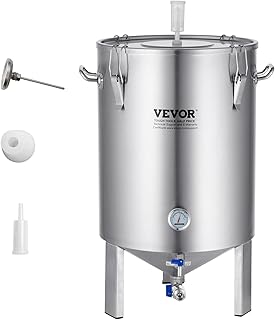
This larger capacity vessel features a conical bottom design to help collect sediment and facilitate fermentation. It includes yeast slurry and beer valves for easy discharge, enabling smoother transfer and bottling. The same 304 stainless steel construction ensures durability and easy cleaning, with a thick-walled 0.5 mm barrel and a silicone-sealed lid to prevent leaks and contamination. Best for mid-to-large batches or when sediment management is a priority. Choose this if you need easier separation of yeast and clarified beer or wine runoff. Limitation: larger footprint requires more storage space.
Stainless Steel Fermenter 14 Gal

This 14-gallon fermenter is described as ready to use and easy to clean, with ample headspace for 10-gallon batches. The emphasis is on practicality and straightforward operation, making it a strong option for home brewers who want a reliable, no-fuss vessel. Best for medium-batch brewers who value simplicity. Caution: ensure seals and fittings are compatible with your planned transfers and connections.
VEVOR 8 Gal Pressure Fermenter
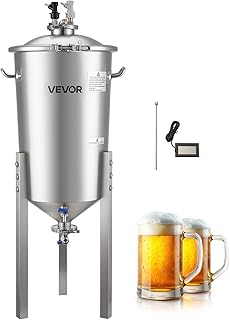
This 8-gallon unit is designed for pressure fermentation, featuring a built-in system to monitor real-time pressure and prevent CO2 overflow. It also includes a built-in electronic thermometer covering 32–104°F (0–40°C), enabling precise temperature control for consistent flavor development. Constructed from 304 stainless steel with a 0.5 mm wall, the vessel balances durability with manageable weight. Best for brewers who want controlled fermentation under pressure. Limitation: pressure fittings and operation require careful handling and knowledge of pressure safety.
VEVOR Conical Pressure Fermenters

This 16-gallon pressure-capable fermentation bucket adds cooling tubes and a yeast slurry bottle, making it suitable for larger batches and advanced fermentation workflows. The unit maintains 304 stainless steel construction with a 0.5 mm wall, ensuring durability and easy cleaning. A conical bottom supports sediment collection, and the sealed lid helps prevent leaks. Best for makers seeking pressure fermentation options and larger-volume batches. Choose this if you plan to manage CO2 and temperature actively. Limitation: heavier and larger footprint may require more storage and handling space.
Buying Guide
Key factors to consider when selecting a stainless steel fermentation bucket:
- Capacity: Match to your typical batch size. Small 8–14 gallon options suit hobbyists; 16 gallons suit larger batches.
- Material and finish: Food-grade 304 stainless steel resists corrosion and is easy to clean. Thicker walls add durability but increase weight.
- Seal and venting: A silicone gasket and a reliable locking lid prevent leaks and contamination. Optional exhaust vents support sterile, breathable fermentation.
- Conical bottom: Helpful for sediment collection and easier transfer of clarified liquid.
- Special features: Pressure fermentation capability, cooling tubes, and additional valves can improve control but may raise complexity.
Frequently Asked Questions
- What is the advantage of a conical bottom in a fermentation bucket? It aids in sediment collection and easier clarification during transfers.
- Is 304 stainless steel safe for fermentation? Yes. It is food-grade and widely used for brewing and fermentation equipment.
- Do I need pressure fermentation equipment for home brewing? Not always, but pressure capability helps with CO2 control and certain fermentation profiles.
- How important is a silicone gasket on the lid? A good gasket reduces the risk of leaks and contamination, especially during agitation.
- Can I use these buckets for wine or mead? Yes, most stainless steel fermentation buckets are suitable for wine, mead, and beer within their capacity ranges.
- What should I consider for cleaning and maintenance? Look for smooth interiors and uniform finishes to minimize residue buildup; clean promptly after use.