If you’re shopping for a durable stainless steel Chinese cleaver, you want a blade that stays sharp, resists corrosion, and handles a variety of tasks—from chopping vegetables to breaking down meat. This guide highlights five top options, explains who they’re best for, and helps you compare features like blade steel, weight, and handle design. Ideal for home cooks, professional kitchens, and those who want long-lasting performance with minimal maintenance.
| Product | Blade Size | Best For |
|---|---|---|
| Cuisinart 7″ Stainless Steel Cleaver | 7″ | Everyday chopping and bone-in poultry |
| Victorinox Fibrox 7 in Chinese Cleaver | 7″ | Balanced, versatile kitchen knife |
| PAUDIN 7″ Cleaver | 7″ | Durable, high-edge retention for meats and vegetables |
| TUO 7″ Vegetable Cleaver | 7″ | Curved blade flexibility for mincing and slicing |
| ZHANG XIAO QUAN SINCE 1628 Heavy Duty Cleaver | Heavy-duty | Bone cutting and heavy-duty tasks |
Cuisinart 7″ Stainless Steel Cleaver with Blade Guard

- Blade: High-quality stainless steel for general-purpose chopping.
- Use: Easily chops through soft poultry and meat bones as well as hard winter squash.
- Storage: Includes matching blade guard for safe handling and easy storage.
Best for: home cooks who want a reliable, entry-level cleaver with a safe storage option. Caution: blade guard is best used when the knife is dry to prevent corrosion.
Victorinox Fibrox 7 in Chinese Cleaver

- Brand: Victorinox, Swiss Made design; durable and well-balanced.
- Blade: 7-inch versatile utility knife with straight edge.
- Care: Dishwasher-safe and durable for daily kitchen use.
Best for: cooks seeking a balanced, reliable cleaver suitable for chopping, dicing, and general kitchen tasks. Limitation: dishwasher exposure may affect edge over time; hand washing is preferred for longevity.
PAUDIN Cleaver Knife, 7 Inch

- Edge: Premium high-carbon stainless steel with 56+ Rockwell hardness for sharpness and edge retention.
- Handle: Wooden handle designed for a secure, comfortable grip.
- Versatility: Suitable for disjointing cuts, deboning, and chopping vegetables.
Best for: users needing strong edge retention and a traditional wooden handle. Limitation: higher maintenance to prevent staining and rust on wooden components.
TUO Vegetable Cleaver Knife, 7 Inch
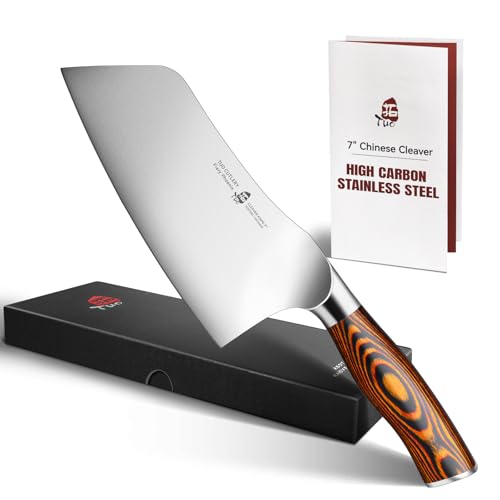
- Blade: Forged from high-carbon German stainless steel DIN:1.4116, tempered with vacuum heat treatment for hardness and wear resistance.
- Edge: Razor-sharp edge with 18-degree per side sharpening; blade is designed for precise mincing and chopping.
- Handle: Pakkawood handle with full tang for stability and durability.
Best for: cooks wanting a precise, razor-sharp cleaver with ergonomic pakkawood handle. Limitation: some users may prefer lighter weight for delicate tasks.
ZHANG XIAO QUAN SINCE 1628 Heavy Duty Cleaver
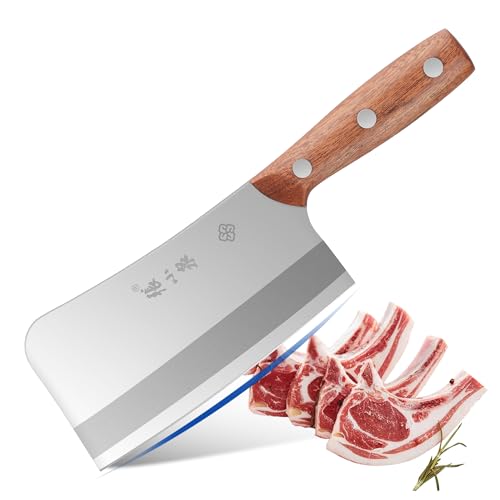
- Material: 40Cr13 stainless steel blade with a Shabili wood handle for comfort.
- Durability: Thickened blade and heavier weight designed for bone cutting and heavy-duty tasks.
- Heritage: Brand with centuries of knife-making experience; built for longevity.
Best for: those needing a heavy-duty option for bones and thick cuts. Limitation: heavier weight may be less comfortable for extended tasks.
Buying Guide
What should you consider when choosing a stainless steel Chinese cleaver?
Blade steel and hardness affect edge retention and corrosion resistance. Higher carbon content improves sharpness but may require more maintenance to prevent rust. Consider the cleaning method; some blades tolerate dishwasher cycles, while others benefit from hand washing.
- Blade size and weight: A 7-inch blade is versatile for home kitchens. Heavier cleavers are better for bone and dense cuts; lighter ones feel nimble for vegetables.
- Handle design: Wood offers grip and traditional aesthetics but may need more care; composite or stainless handles are often easier to maintain.
- Edge geometry: A sharp edge (low-angle) cuts cleanly but can dull faster. A partially hollow grind helps reduce sticking on some foods.
- Maintenance: Some blades have non-stick coatings to reduce food adhesion; others rely on plain stainless steel for easier cleaning.
Best practices for maintenance and use
- Keep blades dry after washing to prevent rust and corrosion.
- Regularly hone the edge; re-sharpen as needed to maintain performance.
- Store with a blade guard or in a protective sheath to avoid dulling or injury.
- Avoid cutting through extremely hard bones with very thin blades; select a heavy-duty cleaver for these tasks when necessary.
Common questions buyers ask
- What is the best cleaver for bone-in meat? A heavy-duty cleaver with a thick blade and robust handle is preferred for bone work.
- Are stainless steel cleavers easier to maintain? Yes, stainless steel resists rust and is typically easier to clean than high-carbon steels, though edge retention varies by alloy.
- Should I choose a wooden or synthetic handle? Wooden handles offer traditional feel and grip, while synthetic materials tend to be more durable and easier to maintain.
- Is a curved blade better than a straight one? Curved blades can enhance chopping and smoothing actions for certain vegetables, while straight blades excel at precise cuts and deboning tasks.
- Can these cleavers replace a chef knife? Cleavers are versatile but specialized; for delicate tasks, a secondary chef knife may be helpful.
- How should I sharpen a cleaver? Use a quality sharpening stone or a guided sharpening system; maintain a consistent edge angle according to the blade design.