Find the right slotted bread cutting board that keeps countertops clean and makes slicing easier. This guide highlights five top options with built‑in crumb trays or slotted tops, ideal for homes that bake daily bread, sourdough lovers, and entertainers who serve bread with dips. Each product is explained for who it’s best for, along with practical pros and a small caution to help you choose confidently. The table below summarizes the top picks to compare at a glance.
| Product | Brand | Size (approx) |
|---|---|---|
| Goaste Wood Bread Cutting Board with Crumb Catcher | Goaste | 15″ x 9.6″ |
| RoyalHouse Large Premium Natural Bamboo Bread Cutting Board | RoyalHouse | Large (approx. 15″ x 9.5″) |
| Bread Cutting Board with Crumb Catcher Tray | VZODESR | 15″ x 9.5″ |
| Ironwood Gourmet Bread Cutting Board | Ironwood Gourmet | 9.75″ x 15″ |
| Bamboo Bread Board with Crumb Tray | TARUNMO | 13″ x 10″ |
Goaste Wood Bread Cutting Board With Crumb Catcher

Best for: cooks who want a sturdy, natural wood board with a built‑in serving tray. This 15″ long board uses solid acacia wood, which resists moisture and keeps knives sharp longer than many plastics. The top is removable to reveal a crumb tray for easy cleanup, making it ideal for daily bread slicing or entertaining.
Why chosen: The combination of a generous cutting surface and a detachable serving tray helps maintain a clean counter while presenting sliced bread neatly. Acacia wood provides durability and a classic look, reducing odor absorption and water damage.
Caution: The board is thick and heavy; consider storage space and handling when lifting or washing.
RoyalHouse Large Premium Bamboo Bread Cutting Board
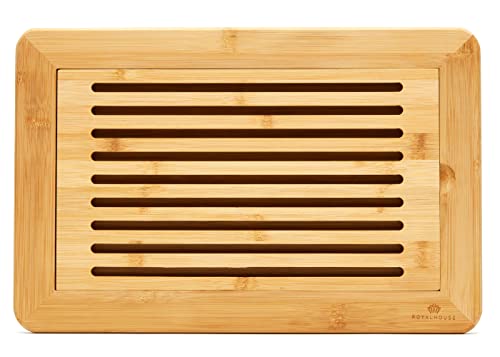
Best for: households prioritizing eco‑friendly materials that are gentle on knives. The bamboo surface stays smooth, with a built‑in crumb catcher for easy cleanup after slicing crusty loaves or cheese boards.
Why chosen: Bamboo is renewable, durable, and knife‑friendly, offering a balance of style and practicality for everyday bread slicing and serving.
Caution: Bamboo can warp if exposed to excess moisture; dry promptly after washing and avoid soaking.
Bread Cutting Board With Crumb Catcher Tray

Best for: buyers who want a two‑piece design that doubles as a serving tray. The top board measures about 15″ x 9.5″ with a removable crumb catcher underneath to keep crumbs contained and to repurpose the tray for serving.
Why chosen: The extra‑large surface allows cutting of various breads, while the removable tray makes cleanup straightforward and clean surfaces ready for serving.
Caution: The design relies on a separate crumb tray; ensure it’s cleaned and reassembled properly after use to prevent crumbs from collecting in the hinge area.
Ironwood Gourmet Bread Cutting Board

Best for: traditionalists who want a classic acacia wood finish with built‑in crumb management. The board’s dimensions accommodate standard baguettes for slicing and serving, with a design that adds elegance to table settings.
Why chosen: The grained acacia wood provides visual depth and a sturdy cutting surface while the crumb catcher helps manage mess during every slice.
Caution: Scratches can appear over time; hand wash and oil periodically to preserve the wood’s natural look and longevity.
Bamboo Bread Board With Crumb Tray

Best for: compact kitchens needing a space‑efficient solution that still offers a dedicated crumb tray. The top is slotted bamboo, paired with a removable crumb tray to capture crumbs during slicing.
Why chosen: The two‑piece design reduces countertop mess and makes cleanup quick, especially for sourdough or challah lovers who slice frequently.
Caution: Bamboo, while durable, can show wear with heavy use; avoid soaking and dry promptly after washing to maintain board integrity.
Buying Guide: Slotted Bread Cutting Boards
Key purchase considerations help align your choice with kitchen style, bread types, and cleanup habits. Consider size, wood type, and crumb‑catching design to minimize mess and maximize usability.
What size do I need? Choose a board that accommodates your typical loaf width and crust type. A 15″ board works well for most loaves, while 13″ boards suit smaller breads or daily use.
What material should I pick? Acacia and bamboo are common for their knife friendliness and durability. Acacia offers rich color and density; bamboo is eco‑friendly and renewable but may require careful moisture care.
How important is a crumb catcher? If you slice crusty loaves often, a crumb tray or removable top helps keep counters cleaner and cleanup faster. Some trays double as serving platters, which is ideal for entertaining.
Maintenance tips: Dry boards after washing, oil or wax occasionally to preserve wood, and avoid soaking. For bamboo, wipe and dry promptly; for acacia, use mineral oil or a food‑safe wood conditioner to maintain finish.
Usage considerations: If you slice directly over a tray, you’ll reduce surface mess. If you need a serving option too, look for a model with a detachable top or integrated tray to maximize versatility.
Frequently Asked Questions
- What is a slotted bread cutting board? A board designed with a removable crumb catcher or tray to collect breadcrumbs during slicing, keeping counters tidy and making serving easier.
- Are these boards dishwasher safe? Most are not; hand wash and dry thoroughly to maintain wood integrity and prevent cracking.
- Which material is best for longevity? Acacia and bamboo offer durability; the choice depends on aesthetic preference and maintenance willingness.
- Can these boards be used for serving? Yes. Many boards double as serving platters once the crumb tray is removed or reconfigured.
- Do these boards fit larger bread varieties? Most options accommodate standard loaves; check dimensions before purchasing if you bake oversized artisan breads.
- Is oiling necessary? Periodic oiling helps preserve wood and extend life, especially for acacia boards used in moist kitchens.