Looking for a professional-grade countertop convection oven that delivers even heat, large batches, and durable build? This guide highlights top picks ideal for chefs, caterers, or busy home kitchens. Each option emphasizes capacity, airflow, and reliability, with notes on who benefits most and any practical limitations. The table below summarizes five strong choices to compare at a glance.
| Product | Best For | Capacity | Key Benefit |
|---|---|---|---|
| VEVOR 66L/60Qt Convection Oven | Small catering events or bakery prep | 60 Qt / 66 L | High heat range and four racks for large batches |
| Elite Gourmet 47.5Qt French Door | Versatile multi-dish cooking | 47 L | Dual French doors and rotisserie for varied cooking |
| Avantco CO-14 Quarter Size | Compact spaces with occasional full-size pans | 0.8 cu ft | Fits up to three quarter-size sheet pans |
| VEVOR 43Qt Half-Size Oven | Medium batches with front glass view | 43 Qt / 47 L | Strong convection with glass door and cool-touch features |
| KoolMore KM-CTCO-44 | Small business or cafe baking | Full-size pans, 4 racks | High-power 3500W and ETL-listed safety |
VEVOR Commercial Convection Oven, 66L/60Qt

Best for high-volume batches in a compact footprint. This oven offers a spacious 60 Qt interior across four levels, allowing multiple trays and even cooking with an 1800W fan-driven convection system. Two simple knobs control temperature (150-500°F) and time (0-120 minutes), giving predictable cycles for consistent results. The stainless body and tempered glass door minimize heat loss while providing clear monitoring. Best for caterers or parties that require large batches with relatively quick turnover. Limitation: larger footprint for limited counter space; ensure ventilation for high-output operation.
Elite Gourmet ETO4510MX French Door Convection Oven

Best for multi-dish cooking with space-saving doors. The 47.5 Qt capacity accommodates up to 18 slices of toast or a 20 lb turkey roast, with four rack positions and a rotisserie option. The French dual-door design lets you open one or both doors, saving counter space. Convection improves browning and evenness, while the rotisserie feature adds versatility for roasting. Choose this if you need flexible cooking for different meals in a compact footprint. Limitation: interior height may constrain taller items on certain racks.
Avantco CO-14 Quarter Size Convection Oven
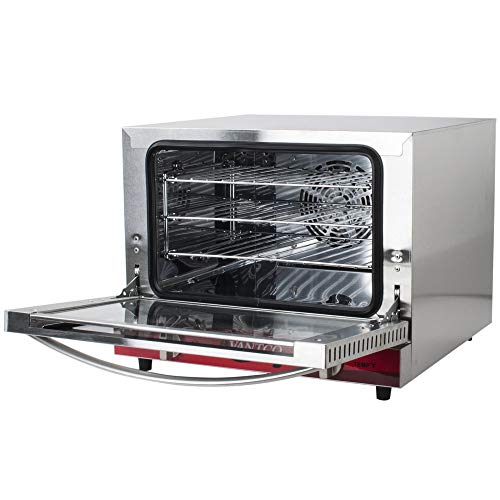
Best for limited spaces needing a compact, reliable convection option. This quarter-size oven fits up to three quarter-size sheet pans and dimensions are tailored for tight counter footprints. It’s ideal for small cafés, bakeries, or test kitchens where space matters more than capacity. The lower interior size means smaller batches—the trade-off for a very small machine. Limitation: not suited for very large pans or high-volume bakery work.
VEVOR Commercial Convection Oven, 47L/43Qt
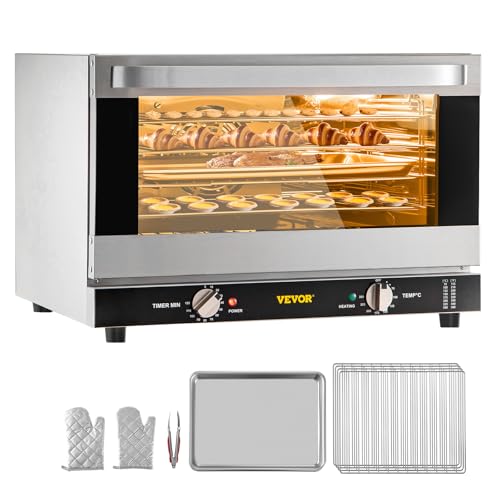
Best for medium batches with a front glass door for visibility. It yields a 43 Qt interior with four rack positions and a 1600W convection system. The dual-wall tempered glass door helps reduce heat loss, and a cool-touch handle improves handling. Suitable for busy kitchens that need reliable, steady performance without the larger 60 Qt unit. Limitation: slightly less interior space than the 66L model, which affects batch size on peak days.
KoolMore 32″ Commercial Countertop Convection Oven

Best for small restaurants or cafes needing full-size baking capacity on a countertop. This KoolMore unit offers four racks and high-waste output with 3500W of power, designed to handle full-size pans. It’s compact relative to stand-alone ovens and suitable for high-demand service. Limitation: higher power draw requires a robust electrical setup and proper kitchen planning.
Buying Guide: How to Choose a Professional Countertop Convection Oven
What capacity do you need? For large batches, prioritize ovens with 40+ quart interiors and multiple racks. If you frequently bake for gatherings or cater events, models with rotisserie options or dual doors can save time and space.
How does airflow affect results? Convection ovens move hot air with a fan. Look for even heat distribution and a strong fan (watts between 1400–1800) for consistent browning and shorter cook times.
What about door design and insulation? A tempered glass or double-door design helps you monitor progress while reducing heat loss. Stainless steel interiors resist corrosion and are easier to clean in busy kitchens.
Which features justify the price? Consider interior capacity, door construction, ease of cleaning, and safety features like cool-touch handles and sturdy racks. A front glass door can be a practical upgrade for quick checks during service.
Space and power considerations matter. Measure counter depth and ensure your electrical supply matches wattage needs (120V units are common; 208–240V variants exist for higher-power models).
Maintenance and warranties. Prefer models with straightforward cleaning access and available replacement parts. Check for local service options and simple rack configurations to minimize downtime.
Frequently Asked Questions
- What size convection oven should I choose for a home bakery? A model in the 43–66 Qt range with four racks is typically suitable for small bakery runs and decently sized batches.
- Do I need a rotisserie function? Rotisserie is beneficial if you roast larger meats or want added versatility, but it is not essential for all users.
- Is a glass door better than a metal door? A glass door helps visually monitor progress and can reduce heat loss when used properly, while metal doors may be sturdier. Consider your monitoring preference.
- Can countertop ovens replace a full-size oven? For high-volume, professional kitchens, countertop convection ovens can supplement or replace certain tasks, but they have limited interior height and overall capacity compared to larger units.
- What maintenance should I perform regularly? Clean racks and interior after use, inspect doors for seals, and ensure fans operate quietly without debris for consistent performance.
- What safety considerations matter? Ensure proper clearance around the unit, stable placement on a heat-resistant surface, and adherence to electrical guidelines for high-wattage appliances.