Looking for plant-based, eco-friendly food storage and takeout containers that are durable, microwave-safe, and BPA-free? This guide highlights five top plant-based options ideal for home cooks, meal preppers, and small businesses aiming to reduce plastic waste. Each product is evaluated for best use cases, durability, and practicality, with quick notes on who should choose it and potential limitations.
| Product | Best For | Key Benefit |
|---|---|---|
| Glotoch Express 50 Pack, 22oz | Meal prepping and daily lunches | 40% plant-based cornstarch material with BPA-free PP |
| Glotoch Express 100 Piece, 28oz | Office lunches and picnics | Durable, microwave and freezer safe, reduces single-use plastics |
| Glotoch Express 100 Piece, 32oz | Family meal prep and batch cooking | Large capacity, strong PP composite, leak resistance |
| ECO PRODUCTS Take Out Wedge, 500 | Restaurant takeout and catering | Compostable PLA, renewable material from plants |
| Vegware Clear PLA 8oz Bowls, Case of 1000 | Cold salads and grab-and-go | Renewable PLA, compostable; many units for bulk use |
Glotoch Express 50 Pack 22oz Plant-Based Containers

Best for: Eco-conscious households and small offices that need a cost-efficient starter set for meal prep and daily lunches. The 50-piece configuration helps with portion control and reduces reliance on traditional plastic takeout containers.
Why selected: Made from a 40% plant-based cornstarch blend with food-grade PP, these containers are BPA-free and designed to be odor-free. They offer 8x6x2 inch capacity, suitable for salads, sandwiches, and snacks, with a 40% reduction in plastic waste versus conventional options. Reheating guidance: remove the lid before microwaving.
Caution: While durable for many uses, purely starch-based components may soften under high heat; use the microwave with the lid off or vented.
Glotoch Express 100 Piece, 50 Pack 28oz Containers
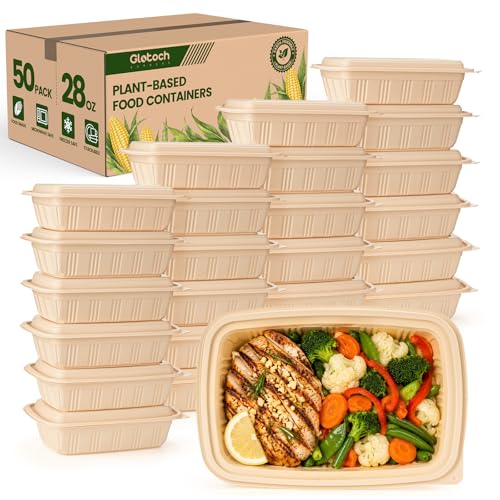
Best for: Offices and families that require more capacity per container for bigger salads or meals. The 28 oz size expands meal portioning options beyond smaller lunch sizes.
Why selected: Comes with 50 containers and 50 lids, using 40% plant-based cornstarch with BPA-free PP. Reduces single-use plastics by about 40% and supports weekly meal planning. Reheating and freezing are supported with a wide temperature range. Remove lid before microwaving.
Limitation: Slightly bulkier design compared to smaller 22 oz options; ensure storage space accommodates the larger size.
Glotoch Express 100 Piece, 32oz Large Containers

Best for: Families and meal-prep enthusiasts who want larger portions and versatile use for leftovers, soups, and entrees. The 32 oz size offers substantial capacity for diverse meals.
Why selected: 50 containers with lids; 40% plant-based cornstarch composition plus durable PP materials deliver better leak resistance. Safe from -4°F to 248°F, enabling microwaving and freezing. Remember to remove the lid before microwaving.
Limitation: Heavier than smaller variants due to size; plan for stacking and refrigerator space accordingly.
ECO PRODUCTS Compostable Take Out Wedge Sandwich Containers, 500

Best for: Catering businesses and food-service operators needing a compostable, PLA-based option for sandwiches and cold lunches. The wedge shape supports compact packing and clear labeling.
Why selected: Made from renewable PLA derived from plant sugars, compostable and ASTM compliant. The case provides bulk ordering efficiency for high-volume takeout or events.
Limitation: PLA containers require commercial composting for best disposal outcomes; not always accepted in all home composting programs.
Vegware Clear PLA 8oz Salad Bowls, Case of 1000

Best for: Bulk grab-and-go operations and events that require lightweight, cold-food containers with a clean, presentable look. Ideal for salads and fruit portions.
Why selected: Vegware uses renewable plant-based PLA; compostable options align with sustainability goals. The large case quantity supports venues with steady throughput.
Limitation: Best suited for cold foods; higher heat exposure can affect performance, so avoid microwaving unless specified for the product.
Buying Guide: Plant-Based Container Considerations
- Materials and sustainability: Look for plant-based content (cornstarch, bamboo, PLA) and confirm BPA-free status. Consider how much plastic waste your purchase eliminates, and whether the material is compostable in your local facilities.
- Heat safety: Check temperature ranges for microwaving and freezing. Some containers require removing lids or venting for microwaves to prevent sogginess or warping.
- Durability and leakage: PP-based composites often provide better leak resistance than pure starch-based options. Think about the types of meals you transport (soups, sauces, salads) and choose accordingly.
- Size and portioning: Select sizes that fit your typical meals and storage space. Using a mix of sizes can streamline meal prep and reduce packaging waste.
- Cost and scalability: For businesses, bulk packaging and consistent lid compatibility can lower operational friction. Consider whether a supplier offers replacement lids or interchangeable components.
Frequently Asked Questions
- Are plant-based containers safe for microwaving?
Many are microwave-safe up to a specified temperature. Always remove lids or vent as directed by the manufacturer to prevent leaks or warping.
- Do plant-based containers reduce plastic waste?
Yes, these containers use plant-based materials and often substitute portions of traditional plastics, contributing to lower plastic waste compared to all- Petroleum-based options.
- Are compostable containers suitable for all disposal facilities?
Not always. Some facilities accept compostable plastics, while others do not. Check local guidelines for compostability and industrial composting options.
- Which size is best for meal prepping?
Smaller 16–28 oz sizes are convenient for daily meals and office lunches, while 32 oz or larger containers suit families and bulk meal prep.
- Can these containers replace all single-use takeout packaging?
They can reduce reliance on petroleum-based plastics, but availability, cost, and disposal capabilities may influence substitutions for all use cases.