Looking for a compact, budget-friendly way to portion meats, cheeses, and bread at home? A mini deli meat slicer can provide precise, safe slicing in small spaces. This guide highlights five compact slicers that suit different needs—from light daily use to more serious at-home prep. Each pick includes who it’s best for and why it stands out, plus a practical caution. The quick reference table below helps compare core specs at a glance.
| Product | Best For | Key Benefit |
|---|---|---|
| Starfrit Deli Slicer (6.5″ blade) | Snacking homes and compact kitchens | Slim footprint with versatile 6.5″ blade |
| Borlebbi Meat Slicer (200W) | Medium-duty at-home prep | Two blades for varied foods |
| OSTBA Meat Slicer (6.7″ blade) | Cheese, cold cuts, bread lovers | Removable parts for easy cleaning |
| Elite Gourmet EMT-625B | Entertaining and frequent slicers | Adjustable thickness up to 1/2 inch |
| Pterying 200W Slicer (7.5″ blades) | Versatile, value-focused | Dual blades for efficient slicing |
Buyer tip: If you value space savings, prioritize a model with a compact blade size and a stable base. For frequent use, look for removable parts for cleaning and safety features like a blade guard or food pusher. For families, choose models with sturdy bases and non-slip feet to minimize accidents during operation.
Starfrit Deli Slicer With 6.5″ Blade

The Starfrit Deli Slicer uses a 6.5-inch serrated rotary blade with adjustable thickness from deli-thin to about 1 inch. This model is designed to slice meats, cheeses, and bread, and its compact size makes it suitable for small kitchens. A food pusher, sliding carriage, and thumb guard contribute to safer operation. Best for: households needing lightweight, easy-access slicing for deli-style portions without a large appliance. Limitation: the smaller blade size may be less efficient for very thick or large bone-in cuts.
Borlebbi 200W Electric Meat Slicer

With a robust 200-watt motor, Borlebbi offers two removable 7.5″ stainless steel blades and a stainless steel tray for catching sliced pieces. The thickness control ranges from approximately 0 to 15 mm, providing versatility for deli meats, cheeses, bread, and even some fruits. Best for: home cooks who want versatility and a spare blade for different textures. Caution: ensure thorough cleaning after slicing very fatty meats to maintain blade performance and sanitation.
OSTBA 6.7” Deli Slicer

OSTBA’s home meat slicer features a 6.7″ stainless steel blade and an adjustable thickness dial from 0 to 15 mm. Its 150W motor provides reliable performance for cold cuts, cheese, bread, and even fruits. The design emphasizes easy cleaning with removable parts that are dishwasher-safe. Best for: budget-conscious buyers who want a straightforward, easy-to-clean slicer for daily use. Caution: as with most compact slicers, it’s best for evenly shaped slices rather than large, irregular cuts.
Elite Gourmet EMT-625B Precision Deli Slicer
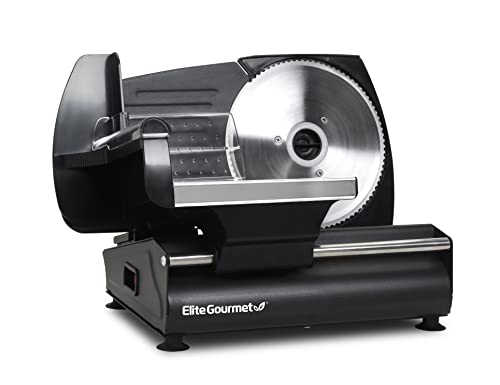
The Elite Gourmet EMT-625B emphasizes precise, fast slicing with a removable stainless steel blade and adjustable thickness. It’s designed for cold cuts, hard cheese, vegetables, and bread, with slice thickness options to suit different servings. Best for: entertaining at home where consistent, quick slices are needed for sandwiches or parties. Limitation: some users note that setup and cleaning require careful handling due to multiple detachable parts.
Pterying 200W Electric Meat Slicer

The Pterying slicer pairs a 200W motor with two removable 7.5″ blades for efficient, even slicing of frozen meats, deli meats, cheese, bread, and vegetables. It features a 0–12 mm thickness range, a safety lock, blade guard, and a non-slip base. Best for: value-focused buyers who want dual blades for flexibility and a robust base for stability. Caution: ensure proper blade alignment and cleaning to maintain cutting efficiency.
Buying Guide
- Blade size and capacity: Smaller blades save space but may limit thickness and volume. For compact kitchens, 6.5–6.7″ blades are common and sufficient for most deli tasks.
- Adjustable thickness range: Look for at least 0–15 mm (0–0.59 in) for versatility, including deli-thin slices and thicker portions for sandwiches.
- Safety features: A food pusher, blade guard, and non-slip base reduce accidents. A foldable or compact design helps in storage.
- Cleaning and maintenance: Removable blades and dishwasher-safe parts simplify sanitation. Stainless steel components resist staining and corrosion.
- Power and speed: 150–200W is typical for home slicers. Higher wattage offers faster slicing, especially for dense cheeses or meat with fat.
- Space and storage: If counter space is limited, favor models with nestable bases, compact footprints, or foldable designs for easy stowage.
Frequently Asked Questions
- What foods can a mini deli slicer handle? – Most mini slicers handle deli meats, cheeses, bread, and some fruits and vegetables. Some models can slice hard cheeses and thin bread well, while thicker cuts may require manual adjustment.
- Are these slicers dishwasher-safe? – Many models offer removable blades and washable parts. Always follow the manufacturer’s cleaning instructions to avoid damaging components.
- Is a mini slicer safer than a big one? – Smaller slicers reduce footprint and can be safer for casual use, but safety depends on design features like blade guards, food pushers, and stable bases.
- How thick can these slicers cut? – Most models provide adjustable thickness from deli-thin (around 0–2 mm) up to 12–15 mm. Check each product’s range for precise needs.
- Do these slicers require assembly? – Some models come ready to use with few steps, while others may require initial assembly. Refer to product pages for setup guidance.
- Which slicer is best for small kitchens? – Look for compact blade sizes (6.5–6.7 inches), stable non-slip bases, and features like foldable or nestable bases for easier storage.