Large poly cutting boards offer durable, knife-friendly surfaces ideal for high-volume prep, buffet displays, and charcuterie setups. This guide highlights five practical picks tailored to busy kitchens, home chefs who need extra workspace, and operators seeking hygienic, easy-care boards. Each option below is evaluated for durability, stain resistance, and ease of cleaning, with notes on who benefits most and any limitations to consider.
Product Overview
| Product | Best For | Key Benefit | Limitations |
|---|---|---|---|
| Winco CBWT-1830 Cutting Board (18″ x 30″) | Restaurants and caterers needing large prep | Stain resistant, reduces knife dulling | Heavy, may be less portable |
| Sasylvia 24″ x 48″ White HDPE Sheet | Industrial or DIY projects with custom sizing | Highly customizable and durable in harsh environments | Sheet, not a finished board |
| Winco Cutting Board (18″ x 24″) | Medium-to-large home or light commercial use | Dishwasher safe, non-porous | Smaller surface than 18×30 |
| Ferrochef 16.5″ x 11″ Silicone Cutting Board | Compact storage and flexible prep | Fold-lock design, heat resistant | Smaller footprint; silicone surface differs from poly |
| Farberware 12″ x 18″ Reversible Poly Board | Budget-friendly, versatile kitchen tasks | Reversible, knife-friendly | Smaller size than others on list |
Winco CBWT-1830 Cutting Board, 18×30
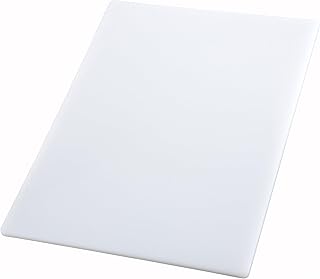
Overview: This commercial-grade board uses high-density plastic to resist cracking, warping, and odors. It is designed to handle daily restaurant use and is stain resistant with a composition that minimizes knife dulling. It’s HACCP approved and particularly well suited for charcuterie, appetizers, and buffet displays where a large, durable surface is needed.
Best for: Foodservice operations and serious home chefs who require a large, durable, dishwasher-safe board. The surface is non-porous, helping to prevent juice absorption and staining.
Why selected: It balances size with practical durability for high-traffic prep, making it a reliable central work surface for big trays and multi-item prep stations.
Limitations: It is a larger, heavier board, which may be less convenient for frequent moving or compact storage.
Sasylvia 24″ x 48″ White HDPE Sheet

Overview: A flexible, industrial-grade HDPE plastic sheet designed for harsh environments. The large sheet measures 24 by 48 inches and is 1/2 inch thick, suitable for CNC work, machining, or DIY projects. It’s resistant to moisture, corrosion, and impacts, offering a robust alternative to wood, metal, or PVC surfaces.
Best for: Shops, makerspaces, or kitchens that require a custom, large-scale cutting surface that can be cut or shaped to fit specific workflows.
Why selected: Its customizable nature and tough HDPE composition make it a practical base for customized cutting layouts and durable prep areas.
Limitations: As a sheet, it isn’t a finished, kitchen-ready cutting board; users must cut and finish edges to their needs.)
Winco Cutting Board, 18×24
Overview: A 18 by 24-inch polyethylene cutting board offering a non-porous surface to resist stains and juice absorption. It’s engineered to withstand higher temperatures and is dishwasher safe, making it convenient for frequent sanitizing in busy kitchens.
Best for: Medium-sized prep areas where a dishwasher-safe, non-porous board is needed for quick turnaround and easy cleaning.
Why selected: Its size hits a balance between workspace and manageability, while the non-porous surface protects against cross-contamination and staining.
Limitations: Not as large as the 18×30 option, which may limit when large items or big trays are used simultaneously.
Ferrochef 16.5″ x 11″ Apricot Silicone Board

Overview: A flexible, silicone cutting board featuring a fold-lock design and a deep drip groove. It’s heat resistant, dishwasher-safe, and designed to be lightweight and portable. The apricot color adds a distinctive, space-saving option for compact kitchens or mobile prep setups.
Best for: Home cooks or small catering operations that value portability, ease of storage, and a board that can be folded for upright drying or space-saving storage.
Why selected: The fold-lock design helps keep workspace contained and reduces countertop clutter, while the silicone surface resists staining and odors.
Limitations: Silicone behaves differently from hard poly surfaces, so it may feel less rigid under heavy chopping tasks or for pinched-knife prep compared to poly boards.
Farberware 12×18 Reversible Poly Board

Overview: A practical, budget-friendly cutting board that is reversible to double the usable surface. It features a hand hole for better control and stability and is designed for versatile cutting, slicing, and chopping across meats, poultry, seafood, and vegetables.
Best for: Budget-conscious buyers who need a reliable, versatile board for everyday kitchen tasks and who may appreciate twice the cutting surface without buying two boards.
Why selected: The reversible design provides extended life on a single board and reduces the need for frequent replacements in light to moderate use scenarios.
Limitations: Smaller than the bulkier options; may not suit large buffet displays or very high-volume prep needs.
Buying Guide: How To Choose Large Poly Cutting Boards
What size suits your space and workflow?
Consider the kitchen layout and the typical volume of prep. Large boards (18×30 inches) maximize prep space but require more storage and may be heavy. Medium boards (18×24) fit smaller stations or home kitchens, while oversized sheets (24×48) suit custom setups or fabrication projects.
Material and cleanliness — poly advantages
Polyethylene boards are non-porous and generally dishwasher safe. They resist stains and odors better than wood and are easier to sanitize in busy environments. Look for high-density polyethylene (HDPE) when possible for durability and resistance to warping.
Durability vs. flexibility
Hard poly boards offer sturdy work surfaces ideal for vigorous chopping. Silicone boards provide flexibility and foldable storage but may feel less rigid for heavy-duty tasks. For commercial kitchens, a rigid poly board is often preferred for long-term performance.
Edge cases: customization and specialty use
Industrial or DIY contexts may benefit from HDPE sheets that you can cut or shape. If you need a seamless, large prep area for catering trays, a sheet may be more appropriate than a finished board.
Maintenance and safety considerations
Choose boards with easy cleaning and stability features, such as non-slip surfaces, integrated handles, or hand holes. Ensure dishwasher compatibility if you plan frequent sanitizing. Confirm that the board’s color or material won’t transfer flavors or dyes to foods.
Usage scenarios at a glance
- Large-scale catering or buffet prep: go with 18×30 or larger, stain-resistant, non-porous surfaces.
- DIY projects or CNC work: a 24×48 HDPE sheet provides customizable flexibility.
- Home kitchens with space constraints: 18×24 boards and foldable silicone boards offer balance between space and usability.
- Budget-friendly everyday tasks: reversible poly boards deliver value and versatility.
FAQ
- What is the best material for a large cutting board used in a busy kitchen?
– High-density polyethylene (HDPE) boards are preferred for durability, non-porosity, and ease of cleaning. - Are silicone cutting boards suitable for heavy chopping?
– Silicone boards are flexible and heat resistant, but they may not offer the same rigid surface as hard poly boards for heavy-duty chopping. - Is a larger board necessary for buffet displays?
– Yes, larger boards maximize surface area for presenting multiple foods and speeding prep in buffet setups. - Can poly cutting boards be put in the dishwasher?
– Many poly boards are dishwasher safe, but check manufacturer guidance to avoid warping in extreme cycles. - Should I choose a reversible board?
– Reversible boards double cutting surface, offering extended life and flexibility for varied tasks. - Do specialty sheets require finishing or edges?
– Yes, HDPE sheets may require trimming or edging to fit specific layouts or equipment.