Looking for kid safe cooking knives that cut real food while protecting young hands? This guide reviews five top options ideal for aspiring little chefs ages 4–12. Each product supports safe, hands‑on learning, helping picky eaters gain confidence as they prepare meals with supervision. Below, you’ll find who each knife is best for, why it’s chosen, and practical limits to consider. A quick summary table of the selected products follows the introduction for fast comparison.
| Product | Best For | Notes |
|---|---|---|
| Tovla Jr. Kid Safe Knife Set (Gift Set) | Beginners who want real cutting experience | Multiple knives; BPA Free |
| Kibbidea Kids Knife Set (4pcs) | Progressing learners with varied blades | Stainless steel blades; finger guards |
| Chanking 13 Pieces Kids Safe Knife Set | Comprehensive kit for pretend-to-real skills | Many tools; safety-first design |
| Tovla 3-Piece Toddler Knife Set | Starter bundle for young beginners | Limited set; simple choices |
| TAORISH 4 Pcs Kids Knife Set | Creative slicing and crinkle cutter play | Plastic blades; fun shapes |
Tovla Jr. Kid Safe Knife Gift Set for Real Cooking

Best for families wanting a complete beginner kit that actually cuts fruits, vegetables, and cheese. The set emphasizes real kitchen skills with safety features. This option is suitable for ages 4–12 and emphasizes independence, responsibility, and family bonding around cooking. The knives are lightweight, BPA‑free, and designed to cut rather than merely pretend.
Who it’s best for: parents seeking a structured, durable starter set that introduces real cutting without compromising safety. Why chosen: it blends Montessori principles with practical cooking tasks, encouraging healthy eating habits through hands‑on meals.
Limitation: while safe, adult supervision is still recommended during use to ensure proper technique and prevent misuse of any sharp edges.
Kibbidea Kids Knife Set for Real Cooking
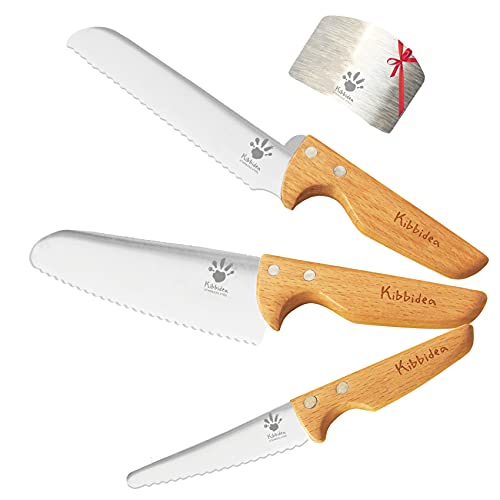
Best for gradual skill-building with distinct blade sizes. This 4‑piece set includes a paring knife, bread knife, chef’s knife, and safety features like finger guards and rounded tips. Stainless steel blades support real cutting practice under supervision, helping kids learn proper knife handling and coordination.
Who it’s best for: kids ready to advance from basic cutting to more varied tasks. Why chosen: the varied blade sizes support progressive skill development in a single kit.
Limitation: blades are real metal; close adult oversight remains essential to avoid mishandling or injury.
Chanking 13 Pieces Kids Safe Knife Set

Best for a comprehensive kitchen tool kit that blends Montessori toys with real cooking potential. This set includes multiple knives, a Y‑shaped peeler, wooden knife, cutting boards, plastic serrated blades, and more. The design emphasizes safety with a one-piece handle and serrated edges to reduce finger risk while teaching slicing techniques.
Who it’s best for: households wanting a broad range of kid-friendly tools in one package for varied pretend‑to‑real play. Why chosen: the diverse tool assortment supports multiple cooking activities and learning objectives.
Limitation: largely plastic components may wear with heavy daily use; ensure cleaning and drying to prevent wear over time.
Tovla 3-Piece Toddler Knife Set

Best for a compact starter option with essential tools. This three‑knife bundle is designed for younger users and includes safety features to prevent finger injuries while offering real cutting practice for beginner cooks aged 4–12. It’s a good stepping‑stone before moving to larger sets.
Who it’s best for: families seeking a simple, affordable entry into kid safe knives. Why chosen: simplicity helps reinforce safe handling habits early on.
Limitation: fewer tools may limit the variety of tasks compared to larger kits; consider expanding later if needed.
TAORISH 4 Pcs Kids Knife Set

Best for creative slicing with a crinkle cutter option and bright, kid-friendly shapes. This 4‑piece plastic knife set includes a crinkle cutter for fun in fruit and potato tasks, along with serrated edges designed to keep blades gentle on fingers. Great for beginner cooks who enjoy playful design and safe practice.
Who it’s best for: kids who enjoy colorful tools and creative cutting styles. Why chosen: the crinkle cutter adds a playful dimension that keeps practice engaging while maintaining safety.
Limitation: plastic blades may not hold an edge as long as metal blades; consider replacement or adding metal blades later for more advanced tasks.
Buying Guide: Kid Safe Knives For Real Cooking
What should you look for when choosing kid safe knives? Here are practical considerations to help buyers compare options quickly.
- Age appropriateness: Check the recommended age range and ensure the blade type suits your child’s skill level.
- Blade material and safety: Real metal blades enable true cutting practice; look for serrated edges, rounded tips, and finger guards where relevant.
- Ergonomics: Lightweight handles, non-slip grips, and balanced weight improve control and reduce fatigue during learning.
- Maintenance: Dishwasher safety or hand-washing requirements affect daily use and cleaning routine.
- Durability vs. variety: Larger kits offer more tasks, while smaller sets simplify learning and reduce overwhelm.
- Supervision needs: All kid knives require adult supervision to ensure safe technique and appropriate use.
- Safety practices: Pair knives with child-safe cutting boards, reinforced supervision, and clear kitchen rules to maximize safety.
Choosing Between Metal vs. Plastic Blades
Metal blades provide real cutting feel and durability, suitable for progressing beyond pretend play. Plastic blades are softer on fingers, reduce risk for younger beginners, and are easier to clean. Start with plastic for beginners or mixed sets, then transition to metal under supervision as skills grow.
Recommended Pairing For Learning Stages
Stage 1: Basic safe handling with plastic or wooden tools; focus on grip, posture, and safe cutting motions. Stage 2: Introduce metal serrated blades in short sessions; practice slicing soft fruits and vegetables. Stage 3: Add more knives and tasks like bread, cheese, and non‑stick safe foods under ongoing supervision to build confidence.
FAQ
- Are kid safe knives truly safe for beginners? They are designed to minimize risk with features like serrated edges and child-friendly grips, but adult supervision is essential for safe use.
- What age is appropriate for these knives? Most sets target ages 4–12, with variations depending on the child’s development and supervision level.
- Can these knives cut real food well? Yes, many sets are designed to cut fruits, vegetables, and cheese, offering real kitchen experience while prioritizing safety.
- Do these sets require significant maintenance? Maintenance varies by set; some are dishwasher safe, others require hand washing to preserve blades and handles.
- Which kit is best for a beginner? A smaller 3‑piece or wooden set is often easiest to start with, then expand to a larger kit as skills progress.
- How do I store kid knives safely? Use a dedicated, child‑proof drawer or knife block, and supervise storage to prevent access by younger children.