Answering the search for the best Japanese egg omelet pan, this guide compares popular tamagoyaki pans and explains who each works best for. These pans are ideal for home cooks exploring traditional rolled omelets, breakfast enthusiasts, and anyone seeking a compact, nonstick option for tamago. The following table highlights five standout picks and who they suit best.
| Product | Best For | Size | Key Benefit |
|---|---|---|---|
| 9Pcs Tamagoyaki Pan Set | Beginner kits and family cooks | 7″ x 5″ | Complete set with lid and utensils |
| TECHEF Tamagoyaki Pan | Even heating and easy flipping | Medium | 3-layer nonstick, PFOA-free |
| HAPPI STUDIO Tamagoyaki Pan | Versatile daily use | 7″ x 6″ | Square design, dishwasher safe |
| Oleex Tamagoyaki Pan Set | Compact storage and multi-use | 5″ x 7″ | Includes molds/accessories |
| Ceramic Coating Square Tamagoyaki Pan | Health-conscious cooking | Rectangle | Ceramic, non-stick, wood handle |
Each product targets a different cooking style. If you want a full starter kit, a larger set with accessories can save time. For everyday use, a square pan with durable nonstick handles frequent flipping. If compact storage is essential, a 5×7 inch pan fits smaller kitchens. If you prioritize ceramic or toxin-free coatings, one option emphasizes a healthy, PFOA-free surface.
9Pcs Tamagoyaki Pan Set

Best for beginners and families who want a full tamagoyaki experience. This 9-piece set includes the pan, lid, and essential utensils, all sized 7 by 5 inches with a 1.2-inch height. The long handle provides a comfortable grip. It’s suitable for induction, electric, gas, and natural-gas stoves. The complete kit makes rolling eggs easier for new users. A limitation is that the 9-piece set may be heavier and require more storage space.
TECHEF Tamagoyaki Pan

Best for even heat distribution and easy flipping. This medium-sized pan is built from forged heavy-gauge aluminum, promoting uniform cooking without hot spots. The sloped front and straight sidewalls simplify rolling and lifting eggs. It features a 3-layer reinforced nonstick coating that is PFOA-free. The pan is induction-ready. A potential drawback is that cheaper models may show coating wear with heavy use over time; handle care matters.
HAPPI STUDIO Tamagoyaki Pan
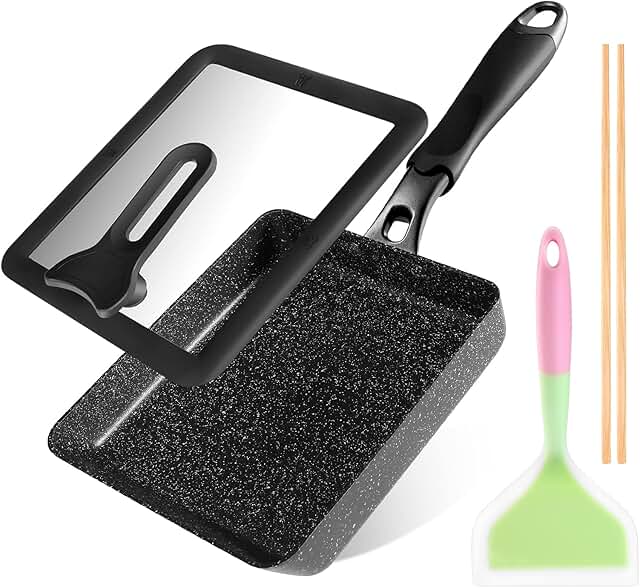
Best for versatile daily use and extra capacity. This square pan measures 7 by 6 inches and comes with a lid, a large spatula, and chopsticks. It is compatible with gas, induction, electric, and ceramic cooktops, and is dishwasher-safe for easy cleanup. It uses a PFOA-free nonstick coating and a heat-resistant wood handle. A caveat is that square shapes may require more careful flipping for beginners transitioning from round pans.
Oleex Tamagoyaki Pan Set

Best for compact storage and accessories. The Oleex set includes a 5×7 inch square pan with additional tools like a musubi mold. The pan uses a PFOA-free nonstick surface with a durable, rust-resistant finish and a wooden handle. It’s suitable for multiple stove types. Limitations include that the included accessories may not appeal to all cooks, and some users may prefer a dedicated tamagoyaki-only pan for rolling precision.
Ceramic Coating Square Japanese Tamagoyaki Pan

Best for health-conscious cooks seeking ceramic nonstick. This square pan features a ceramic coating that is PFOA and heavy-metal free, with a solid wood handle. The 2.5mm aluminum alloy body distributes heat evenly for uniform omelet rolling. It’s a simple, easy-to-clean option. A limitation is that ceramic coatings may wear faster with abrasive utensils; use wooden or silicone tools to extend life.
Buying Guide
What size should I choose?
Pan sizes range from about 5×7 inches to 7×6 inches. Choose a size that matches your typical tamagoyaki roll length and your stove space. Smaller pans save storage room, while larger pans offer more rolling room for thicker omelets.
Which coating matters?
Nonstick coatings reduce sticking and make rolling easier. PFOA-free coatings are standard for health-conscious buyers. Ceramic coatings are durable but may require gentler care to maximize life. Consider whether you prefer metal utensils or wooden options to preserve the surface.
What extras are useful?
Lid, spatula, and chopsticks help with rolling and serving. Some sets include molds for extra shapes or sushi-style creations. A longer handle can improve control during flipping; a heat-resistant handle adds comfort for longer cooking sessions.
Which stove types are compatible?
Most tamagoyaki pans work on induction, gas, and electric stoves. Always verify compatibility if you use an induction cooktop, as some cheaper pans may require a special disk or plate to function efficiently on induction.
What is the best choice for beginners?
A complete set with lid and basic utensils helps new users practice rolling and shaping. Look for a reliable nonstick coating and manageable weight to reduce fatigue during practice sessions.
Care and maintenance tips
Always hand-wash nonstick pans when possible to extend coating life. Use non-metal utensils to avoid scratching the surface. Dry thoroughly after washing to prevent rust on metal parts. Store with care to avoid denting the pan edges.
FAQ
- What is tamagoyaki? A rolled Japanese omelet style that uses a rectangular pan to form thin layers into a compact roll.
- Is ceramic coating safer than traditional nonstick? Ceramic coatings are PFOA-free and often marketed as safer, though performance varies with use and care.
- Can these pans be used on induction stoves? Yes, most are induction-ready, but confirm the product’s specifications before use.
- What utensils should I use? Non-metal utensils are recommended to protect the coating during cooking.
- Which pan is best for beginners? A complete kit with lid and utensils plus a forgiving, uniform nonstick surface is ideal for practice and consistency.
- Do these pans come with recipes? Some sets include basic guides or tamagoyaki tips; check product descriptions for specifics.