Answering the search for practical, odor-control indoor compost bins, these picks are designed for countertop use and everyday kitchen waste. They suit different buyers: busy cooks who want a compact solution, households seeking durable stainless options, and those who value odor management with carbon filters. The table below highlights five strong choices and who they’re best for.
| Product | Best For |
|---|---|
| EPICA Countertop Compost Bin | Stylish, odor control, durable metal |
| Utopia Kitchen Countertop Bin | Long-lasting stainless steel, simple maintenance |
| PERFNIQUE Kitchen Compost Bin | Inner liner with carbon filters, odor control |
| KIBAGA Beautiful Kitchen Bin | Minimalist design, built-in filters |
| OXO Good Grips Easy-Clean Bin | Easy maintenance, space-efficient |
EPICA Countertop Compost Bin Kitchen

The EPICA bin is a 1.3-gallon, stainless steel option with a tight-sealing lid and replaceable activated-carbon filters. It is touted for odor control and ease of cleaning. Its compact footprint makes it suitable for small to medium kitchens and for buyers who prioritize a premium look and durable construction.
Best for: cooks who want a stylish, rust-resistant bin with natural odor suppression. It’s a good fit for users who host guests and want a cleaner counter appearance. Caution: replacement filters add ongoing maintenance considerations and cost.
Utopia Kitchen Countertop Compost Bin

This 1.3-gallon stainless steel bin emphasizes durability and a clean look. It includes charcoal filters to reduce odors and is designed to handle week-long scraps without lingering smells. The durable stainless steel surface resists scratching and chipping and cleans easily.
Best for: households seeking a sturdy, long-lasting metal bin with effective odor reduction. Choose this if you want a simple, low-maintenance option and you don’t mind filters. Caution: bigger footprint than some plastic alternatives.
PERFNIQUE Kitchen Compost Bin

The PERFNIQUE model offers a 1.3-gallon capacity with an inner plastic pail and a handle for easy dumping. It includes two active carbon filters to help block odors while cooking. The lid seals well, making it suitable for kitchens with fragrances from cooking. Replace filters approximately every 4–6 months.
Best for: buyers who want a removable inner pail for easy transfer and strong odor control with replaceable carbon filters. Caution: filter replacement schedule is ongoing and should be tracked.
KIBAGA Beautiful Kitchen Compost Bin

The KIBAGA bin blends form and function with a 1.1-gallon capacity and a rust-proof, powder-coated carbon steel build. It uses a built-in charcoal filter system to minimize odors and comes with a wooden handle for easy portability. The design suits counters with a modern look and a need for odor control.
Best for: shoppers who want a stylish, robust metal option with effective odor management. Caution: heavier than plastic models, which may affect placement flexibility on some counters.
OXO Good Grips Easy-Clean Compost Bin
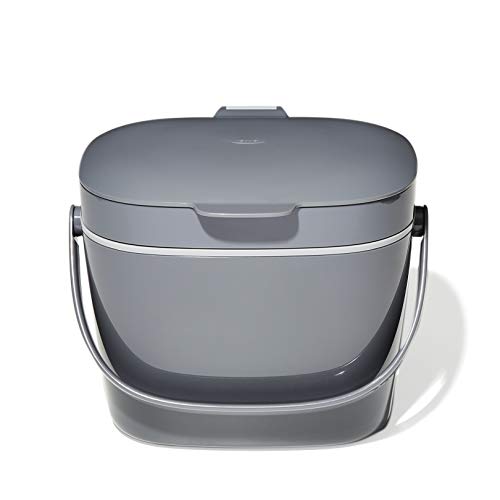
The OXO bin offers a 1.75-gallon capacity with a smooth interior for quick cleaning. Its design keeps compost bags tucked inside and minimizes bag handling. The compact size makes it suitable for small kitchens and quick daily use. A benefit is easy decontamination and maintenance.
Best for: users who prioritize a neat, low-maintenance interior with ease of cleaning. Caution: assumes use with compatible bags; not all liners fit perfectly in every setup.
Buying Guide
What to consider when choosing an indoor kitchen compost bin:
- Capacity: Do you want a bin to last a few days or a full week? Common sizes range from about 0.7 to 1.75 gallons.
- Material: Stainless steel offers durability and a premium look; plastic is lightweight and affordable; coated metal provides a balance of aesthetics and odor control.
- Odor control: Look for carbon filters or airtight lids. Carbon filters require replacement on a schedule; airtight lids reduce emissions but may need more frequent cleaning.
- Maintenance: Inner liners or removable pails simplify transfer and cleaning. Consider whether you prefer dishwasher-safe components.
- Counter space: Measure your available area to ensure the bin fits on your counter without crowding food prep zones.
- Ease of cleaning: A smooth interior and minimal crevices help prevent residue buildup and odors.
- Safety and durability: Rust resistance and sturdy handles improve long-term use in busy kitchens.
How to use and maintain effectively
Line the bin with a liner or use an inner bucket if available. Empty the bin regularly to prevent odors from building up. Replace carbon filters as recommended by the manufacturer to maintain odor control. Clean the exterior and interior with mild soap and water, and dry thoroughly before reusing.
Bag vs. no-bag considerations
Using compostable bags can simplify disposal, but they are not always necessary if the bin includes a robust inner container and odor-filter system. Consider your local waste program and personal preference for cleanliness and aesthetics.
What if you need more options?
For larger households or kitchens with limited counter space, consider wall-mounted or under-sink compost containers or a DIY setup using a sieve-style bin paired with a strong filter system. Always ensure the product suits your cooking style and cleanup routine.
FAQ
- Q: What size is best for a single-occupant kitchen? A: A 0.7–1.3 gallon bin is typically sufficient for daily scraps without frequent emptying.
- Q: Do all bins require carbon filters? A: Not all do; some use airtight lids or inner liners without filters, while others include replaceable charcoal filters.
- Q: Is stainless steel better than plastic for odor control? A: Stainless steel is durable and easy to clean but may rely on filters or lids for odor control, while plastic can be lighter and cheaper but may stain over time.
- Q: How often should a carbon filter be replaced? A: Schedule depends on usage, typically every 4–6 months for many models.
- Q: Can I put liquids in an indoor compost bin? A: Most bins separate liquids or are designed to minimize liquid leaks; ensure your model supports liquid separation if needed.
- Q: Are these bins dishwasher-safe? A: It varies by model; check the product details for cleaning instructions and whether components are dishwasher-safe.