When selecting a filtered water system for a restaurant, prioritize high reliability, consistent water quality, and easy maintenance. The following five options are well-suited for different restaurant setups—from small cafes to busy kitchens. This guide highlights who each model is best for, with clear pros and limitations to help operators choose confidently.
| Product | Best For | Key Benefit | Notes |
|---|---|---|---|
| iSpring CRO1000 | High-demand small business | 1,000 GPD, tankless with on-demand flow | Requires adequate pressure; booster pump recommended if below 80 psi |
| 3M ICE190-S | Ice-focused operations | Excellent ice quality, up to 5 gpm | Best for high-volume ice production |
| Premier Light Commercial 200 GPD | Small restaurants or cafes | Compact, upgradable filtration | Tank is included; consider future add-ons |
| 3M HF25-S Replacement Cartridge | Ice machines/maintenance | Low downtime replacement, 1.5 gpm | Part of a cartridge-based system |
| Bluevua RO100RO POT Countertop | Portability and countertop setups | 6-stage RO with remineralization and UV | No installation; best for flexible setups |
Below are detailed product sections. Each entry explains who it’s best for, why it was selected, and a practical consideration to watch for when ordering for a restaurant environment.
iSpring CRO1000 4-Stage Tankless Commercial RO System

The CRO1000 delivers true commercial-grade RO filtration with a high output of 1,000 GPD and a tankless design for on-demand filtered water. It operates at a flow rate of 0.7 GPM and includes gauges for easy pressure monitoring. An optional PMP1000 booster pump is recommended for low water pressure (below 80 psi; operating range 80-130 psi). Best for: mid-sized restaurants or small businesses needing steady, high-volume purified water. Limitation: booster pump may be required in low-pressure installations.
3M ICE160-S Commercial Ice Filtration System

Designed to optimize ice quality, the ICE160-S provides consistent water with reduced chlorine taste and cysts at flow rates up to 3.34 GPM. It’s ideal for restaurants, cafes, and quick-service outlets needing reliable ice quality with less downtime. Best for: kitchens that rely on ice machines or dispensers. Limitation: primarily focused on ice-quality water, not complete kitchen water filtration.
Premier Light Commercial Grade RO System + 6 Gallon Tank

This compact system delivers up to 200 GPD and includes a 6-gallon pressurized RO storage tank. It’s suitable for large families, small restaurants, and businesses that want on-demand filtered water with room to add more filtration stages later. Best for: small-to-midsize operations seeking a scalable RO setup. Limitation: lower daily production compared to larger commercial units.
3M HF25-S High Flow Replacement Cartridge

This replacement cartridge for high-flow systems reduces chlorine, taste, odor, scale, and particulates at up to 1.5 gpm. It’s designed to minimize downtime and service visits, helping maintain steady operations in a restaurant setting. Best for: ice machines and water lines that require frequent cartridge changes. Limitation: replacement frequency depends on water source and usage.
Bluevua RO100ROPOT Countertop RO System with UV
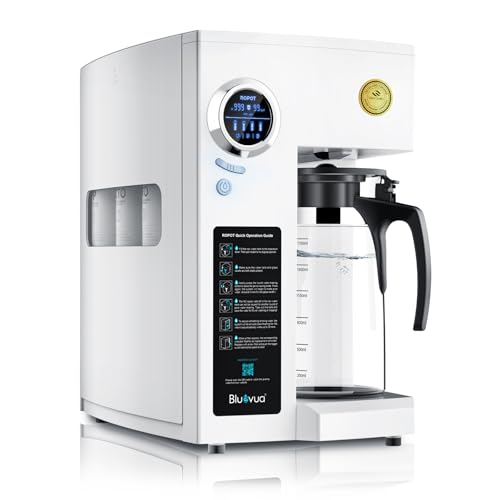
The Bluevua countertop system offers six-stage filtration with a remineralization filter and UV light. It’s portable, requires no installation, and includes a glass carafe. This option is best for operators needing flexible filtration at the point of use or for temporary setups. Limitation: countertop units have lower overall daily output and may not meet high-volume needs.
Buying Guide: Key Purchase Considerations
What volume do you require?
- For high-demand kitchens, prioritize systems rated at or above 1,000 GPD or those with on-demand flow to avoid waiting for filtered water.
- Lower-volume needs can be met with compact 200 GPD units, especially if water use is limited to drinking and prep water.
Where will you install it?
- Under-sink systems save space but may need professional installation and plumbing access.
- Countertop options provide flexibility and are easier to deploy in temporary setups or small spaces.
What water quality are you targeting?
- RO systems excel at removing contaminants but may require remineralization for taste preferences in some drinks and foods.
- Ice-quality filtration requires specific cartridges to minimize taste issues and scale in ice machines.
What maintenance will you perform?
- Cartridge-based systems offer straightforward replacements, while tankless RO units require monitoring gauges and occasional booster pumps.
- Consider total cost of ownership, including filters, membranes, and potential service calls.
Water source considerations:
- If your water pressure is below 80 psi, plan for a booster pump or select a model designed for lower pressure.
- Well water may introduce different contaminants than city water; ensure the chosen system is certified to handle your source.
Frequently Asked Questions
- What is the difference between whole-house and point-of-use filtration for a restaurant?
- Do RO systems remove beneficial minerals?
- Is it essential to have a booster pump with RO systems?
- Can these systems be installed in small kitchens or bar areas?
- What maintenance schedule should I follow?
- Are these systems certified for safety and performance?
Whole-house filtration treats water at the point of entry to the building, providing filtered water to all taps. Point-of-use systems filter water at a specific faucet or appliance, such as a coffee station or ice machine.
Reverse osmosis systems remove many minerals. Some setups include remineralization stages to restore essential minerals and improve taste for drinking water.
Booster pumps help maintain adequate pressure, especially when the incoming water pressure is low. Check your city water pressure before selecting a system.
Yes. Compact and countertop models are designed for limited spaces while still delivering purified water, though throughput may be lower than larger commercial setups.
Replace sediment and carbon cartridges per manufacturer guidance, monitor RO membranes for efficiency, and check gauges or indicators regularly.
Many models reference credible standards and certifications in their product specs; verify NSF/ANSI certifications for the exact unit you choose.