If you need a compact, efficient way to expand cooking capacity, a 2-burner ceramic glass electric cooktop is a practical choice. This guide highlights five suitable models, explaining who each is best for and why it stands out. These options suit apartments, dorm rooms, small studios, and temporary kitchen setups where a traditional range isn’t available. Read on to compare power, safety features, portability, and installation needs to pick the right cooktop for your cooking style and space.
| Product | Voltage/Power | Best For |
|---|---|---|
| GIONIEN Electric Cooktop 2 Burners | 3000W total, 220-240V hard wired | A compact, high-power option for apartments needing built-in style |
| Karinear 2 Burner Electric Cooktop 110V | 2000W, 110V plug-in | Movable, plug-in convenience for dorms or rental spaces |
| CUSIMAX 1800W Ceramic Electric Hot Plate | 1800W, 120V | Extra burner for small kitchens or office/kitchen nooks |
| Karinear 2 Burner Built-in 220-240V | ~1800-2000W total, 220-240V hard wired | For integrated countertops with a seamless look |
| Karinear 110V 2 Burner Plug-In | ~1800W total, 110-120V plug-in | Versatile, user-friendly option with knob control |
GIONIEN Electric Cooktop 2 Burners — Built-in 12 Inch Ceramic

Best for: Apartment dwellers needing a powerful, hard-wired unit. This model offers a 3000W total rating across two 12-inch burners and a 220-240V hard-wire setup, which ensures stable performance without a bulky plug-in requirement. The sensitive touch control allows precise 1–9 power levels and a 120-minute timer, supporting tasks from boiling water to delicate melting. Consider this if you want a seamless, built-in look and reliable high heat for fast meals. A potential limitation is the fixed hard-wired installation, which may require professional wiring for some kitchens.
Karinear 2 Burner Electric Cooktop 110V Plug-In
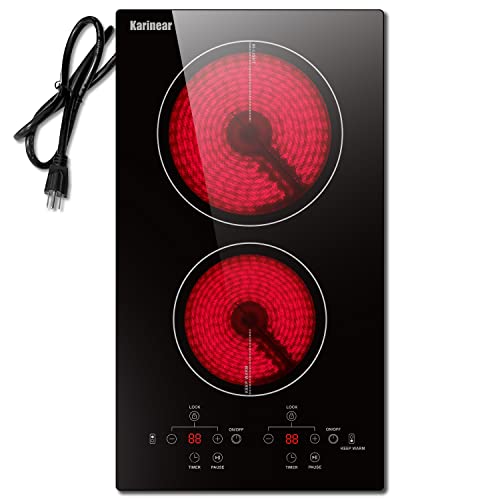
Best for: Renters or campers who need mobility and plug-and-play convenience. This 12-inch dual burner cooktop uses a standard 110V plug, making installation simple and quick. It includes a child safety lock, a 99-minute timer, auto shutdown, and residual heat indicators for safe operation. The two burners provide 1400W and 600W capabilities, allowing separate foods to cook at different temperatures. Limitation: higher energy use per burner can occur if both are run at high levels for extended periods, and it requires access to a power outlet.
CUSIMAX 1800W Ceramic Electric Hot Plate
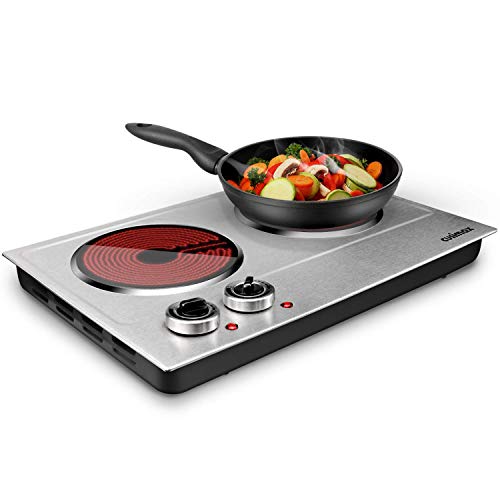
Best for: Small kitchens or office/apt spaces needing a compact dual-burner. This model supports all cookware types and provides 1800W total power with two independent zones. It’s portable and designed for minimal space, making it ideal for apartments, dorms, or secondary kitchens. Caution: as a portable countertop device, avoid overheating and ensure proper surface clearance to prevent heat damage around the unit.
Karinear Two Burner Built-in 220-240V Ceramic Cooktop

Best for: Users needing a dedicated built-in solution with a clean, integrated appearance. Two independent heating zones operate at 9 power levels across 220-240V, with a residual heat indicator and over-temperature protection. The knob control design prioritizes simple operation and safety, particularly for households valuing predictable manual control. Limitation: hard-wire installation may require professional wiring and cut-out alignment for a perfect fit.
Karinear 110V Electric Cooktop 2 Burners With Plug

Best for: Portable, user-friendly settings with knob control and plug-in flexibility. This model provides two burners with 9 heat levels and a hot warning indicator, suitable for dorm rooms, RVs, or temporary kitchens. Choose this if you want a plug-in, easy-to-move unit and straightforward operation. A potential downside is that 110V models may heat slightly slower than 220-240V counterparts when full power is used.
Buying Guide
Key considerations when selecting a 2-burner ceramic glass cooktop:
- Power and voltage: Do you need 110V plug-in for portability or 220-240V hard-wired for higher power and a built-in look? Higher wattage enables faster cooking but requires proper wiring.
- Installation type: Built-in cut-out vs. freestanding countertop unit. Ensure cabinet space, ventilation, and clearance are suitable for your kitchen design.
- Controls: Knob vs. touch controls. Knobs are easier for some users and can feel more reliable for those with limited vision; touch controls offer precise digital settings but may be less intuitive for some users.
- Safety features: Look for child lock, residual heat indicators, auto shutoff, and over-temperature protection to reduce accident risk in busy kitchens.
- Cooking versatility: Consider burners with distinct power levels for simultaneous tasks like boiling water on one burner while simmering on the other.
- Cookware compatibility: Ceramic glass tops work with most pots and pans, but ensure your cookware size matches the burner diameter for efficient heating.
- Portability vs. permanence: If you move often, plug-in models or portable units may be preferable; if your kitchen layout is permanent, a built-in option can deliver a seamless look.
Frequently Asked Questions
- What is the advantage of a 2-burner ceramic cooktop over a single burner?
It allows you to cook two separate dishes at different temperatures, saving time and space in small kitchens. - Are 110V plug-in cooktops slower than 220V hard-wired models?
Yes, generally 110V units heat more slowly and may have lower overall power; 220-240V models offer faster, higher heat. - Can I use regular cookware on a ceramic glass cooktop?
Yes, most pots and pans made from stainless steel, aluminum, and cast iron are compatible; avoid rough-bottomed pans that can scratch the surface. - Is a built-in cooktop harder to install than a countertop model?
Built-in units require precise cutouts and secure mounting; professional installation is often recommended for electrical and safety compliance. - What safety features should I prioritize for a shared kitchen?
Look for child lock, residual heat warning, auto shutoff, and over-temperature protection to reduce burn risk. - Do these cooktops require frequent maintenance?
Ceramic glass surfaces are relatively easy to clean; avoid abrasive cleaners and use gentle, non-scratch tools for best longevity.