If you want to roll and sheet dough with less effort and more consistency, these dough sheet roller machines and pasta attachments offer reliable, hands-free operation. They are best for home bakers, pasta lovers, and small commercial setups that need adjustable thickness control and durable construction. The top picks below balance ease of use, compact design, and versatile dough handling to suit different recipes and spaces. The table summarizes who each product is best for and why it stands out.
| Product | Best For | Why It Stands Out |
|---|---|---|
| Pasta Roller Attachment for KitchenAid Stand Mixer (NEWSETS) | Home pasta fans with KitchenAid | 8 thickness settings, easy attachment, durable stainless steel gears |
| 12″ Folding Dough Sheeter Machine (UNGAII) | Small kitchens and home bakers | Foldable, adjustable thickness, countertop-friendly design |
| Folding Dough Sheeter Machine (Xigugo) | Mid-size bakeries and serious home bakers | Large working footprint, 0–25 mm thickness range, sturdy stainless steel |
| DKN Extra Large Non-Stick Pizza Dough Roller | Large pizzas and versatile doughs | Big feeder, multi-use as fondant and pasta press, durable construction |
| AceChef Pasta Maker with 7 Thickness Settings | Pasta lovers who want flexible thickness | Two cutters, 7 settings, durable hand-crank design |
Pasta Roller Attachment for KitchenAid Stand Mixer

Best for: Home cooks with a KitchenAid mixer who want fast, consistent pasta sheets. This attachment is designed to roll dough into uniform sheets using the mixer’s power, reducing manual effort. It supports sheets for ravioli, lasagna, and noodles, among others.
Why selected: The 8 thickness settings enable precise control from very thin sheets to thicker pasta, while stainless steel construction supports durability and smooth operation with low noise. It is best for users who already own a KitchenAid and want a dedicated pasta-rolling tool that integrates seamlessly with their mixer.
Caution: This attachment requires a compatible KitchenAid stand mixer (not included). Ensure proper alignment to avoid gear strain during operation.
12″ Folding Dough Sheeter Machine

Best for: Home bakers who need professional-looking dough sheets without heavy equipment. Its foldable design makes it compact for small kitchens while delivering smooth, even sheets.
Why selected: Adjustable thickness control (0–17.5 mm) supports a variety of recipes from pizza dough to puff pastry. The folding design conserves counter space and simplifies storage after use.
Caution: Like many manual sheeters, prolonged use can lead to wrist fatigue. Proper posture and a comfortable stance help mitigate strain during extended sessions.
Folding Dough Sheeter Machine (Xigugo)

Best for: Commercial or semi-commercial setups needing a larger, sturdy dough roller for puff pastry, pizza dough, and similar products. It suits users who require a broad working surface and strong construction.
Why selected: Thickness can be adjusted from 0 to 25 millimeters, enabling bakery-level results. The stainless steel build resists wear, and the large foldable design helps save space when not in use.
Caution: It is heavy and may require two-person handling during setup or adjustments. Ensure stable placement on a solid surface.
DKN Extra Large Non-Stick Pizza Dough Roller
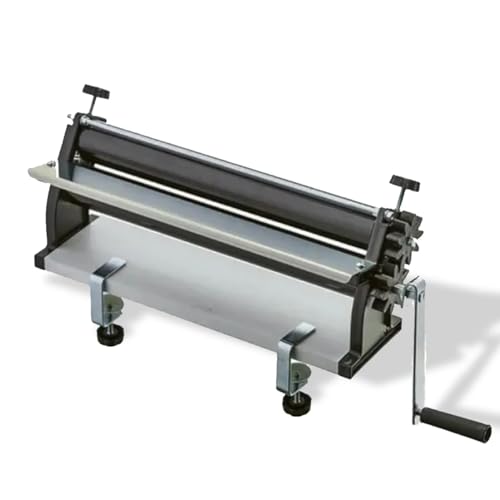
Best for: Bakers needing a robust, all-purpose dough roller with a large feeder for pizzas and more. It doubles as a fondant roller and pasta maker.
Why selected: Built with durable steel and aluminum, the machine provides a broad workload capacity. The non-stick surface helps prevent dough residue buildup, smoothing cleanup after use.
Caution: The device is sizeable and may require a dedicated workspace. The hand crank design can be tiring for long sessions—take breaks or rotate tasks as needed.
Pasta Maker With 7 Thickness Settings
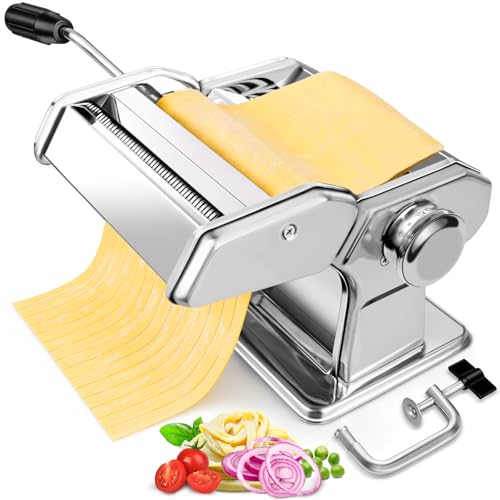
Best for: Pasta enthusiasts who want a compact, manual machine capable of creating multiple pasta widths. The 7 thickness levels accommodate a variety of pasta shapes and textures.
Why selected: It includes two cutter heads (wide fettuccine and spaghetti), enabling diverse pasta styles from a single unit. The hand-crank operation keeps the setup simple and accessible.
Caution: Manual cranking requires some effort; consider occasional rests for extended sessions to avoid hand fatigue.
Rolling Pin And Silicone Pastry Mat Set
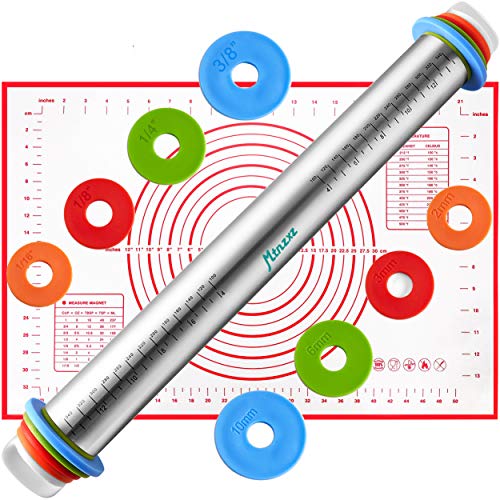
Best for: Bakers seeking accessories to assist with dough thicknessing and rolling. The set complements dough sheet work by providing precise thickness control and clean surfaces.
Why selected: The measuring mat and rings help achieve consistent thickness, especially for pizzas, pies, or pastries. The stainless steel rolling pin offers durability and a smooth rolling action.
Caution: This is a complementary set rather than a stand-alone machine; use it alongside a dough sheet roller for best results.
Buying Guide: Key Considerations For Choosing A Dough Sheet Roller Machine
What size fits your space? Consider folding and compact designs for small kitchens, or larger, sturdy models for light commercial use. A foldable or countertop-friendly unit helps maximize space without sacrificing performance.
Which thickness range do you need? Look for models with adjustable thickness from thin to bakery-thick sheets. A broader range enables more recipes, from delicate pasta sheets to thick pastry puffing.
Is it manual or powered? Manual systems rely on hand cranks and offer portability and simplicity, while powered attachments and sheeters reduce effort and increase consistency for frequent rolling tasks.
Material quality matters. Stainless steel bodies and durable gears resist wear, provide easy cleanup, and maintain performance over time. Non-stick surfaces can simplify dough release, especially for sticky doughs.
Attachments compatibility. If you already own a stand mixer (like KitchenAid), consider attachments designed for that model. Check width, compatibility, and required accessories to ensure a secure fit.
Ease of use and maintenance. Simple adjustment knobs, clear thickness markings, and straightforward assembly speed up workflow. Look for models with easy disassembly for cleaning and maintenance.
Price-to-performance balance. While higher-end units offer broader thickness ranges and larger feed widths, assess your actual dough projects to avoid overinvesting in features you won’t regularly use.
FAQ
What’s the main difference between a pasta roller attachment and a dough sheeter? A pasta roller attaches to a stand mixer to roll dough into sheets; a dough sheeter is a standalone or manual device designed to automatically roll and flatten large batches of dough with adjustable thickness.
Can I use these machines for fondant or pastry dough? Some models are versatile and designed to work with fondant, pastry, or puff pastry; check the thickness range and material compatibility before use.
Are manual crank models suitable for large batches? Manual models are effective for smaller batches; for frequent or large-volume rolling, a powered or larger commercial model may be more efficient.
Do these attachments require regular maintenance? Yes. Clean after use, lubricate moving gears as recommended by the manufacturer, and store in a dry place to prevent corrosion and wear.