Finding the right coffee filters for 8-12 cup basket brewers is essential for consistent flavor and hassle-free brewing. This guide highlights five top options that balance filtration, durability, and eco-friendliness. The best choices suit home brewers who want clean cups with minimal sediment, quick availability, and straightforward use. The top picks include filters that fit most 8-12 cup basket machines, plus alternatives for eco-conscious consumers and those who prioritize flavor clarity.
| Product | Brand | Count | Best For |
|---|---|---|---|
| Amazon Basics Basket Coffee Filters for 8-12 Cup | Amazon Basics | 200 | Everyday use, broad compatibility |
| 8-12 Cup Basket Coffee Filters (Natural Unbleached) | Rupert and Jeoffrey’s Trading Co. | 200 | Flavor clarity and sturdy construction |
| Melitta 8-12 Cup Basket Filter Paper (Natural Brown, 400) | Melitta | 400 | High-volume households, compostable option |
| 8-12 Cup Basket Coffee Filters (Natural Unbleached, 500) | Rupert and Jeoffrey’s Trading Co. | 500 | Long-term supply, consistent filtration |
| Coffee Filters 8-12 Cup, 100 Count | Revelook | 100 | Eco-friendly options with balanced extraction |
Introduction to the top five selections shows a range of counts and materials. The focus is on filters that minimize sediment, preserve flavor, and fit standard 8-12 cup basket machines. The following sections detail each product, including who it’s best for and any notable limits.
Amazon Basics Basket Coffee Filters for 8-12 Cup

Best for everyday use and broad compatibility, these 200 white basket filters are designed to fit most 8-12 cup basket brewers. They offer superior filtration to reduce gritty sediment while preserving coffee taste. They are marketed as compostable, appealing to eco-conscious buyers who want a straightforward, inexpensive option. Choose this if you want a reliable, widely compatible choice with minimal fuss. A potential limitation is the lack of refined flavor notes beyond effective filtration.
8-12 Cup Basket Coffee Filters (Natural Unbleached)
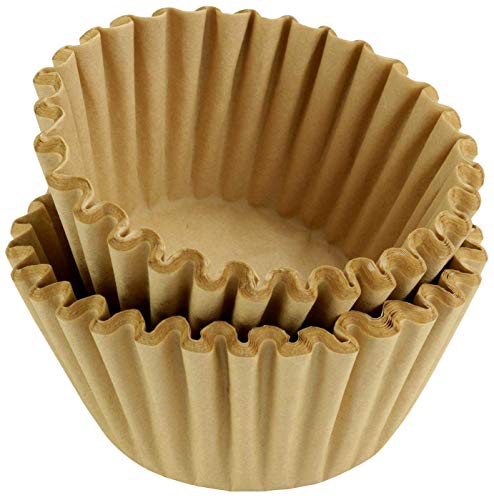
Best for flavor clarity and sturdy sides, these unbleached filters are designed to prevent grounds from bypassing the filter. They help minimize oils and micro-particles that can make coffee taste bitter. They are made in the USA and emphasize eco-friendliness. Choose this if you value flavor purity and domestic production. Limitation: the unbleached appearance may not appeal to all aesthetics, though it signals natural materials.
Melitta 8-12 Cup Basket Filter Paper (Natural Brown, 400 Count)

Best for high-volume households, these filters come in a 400-count bundle. Melitta basket filters are designed to hold their shape and resist tearing during brewing. Natural Brown color indicates a natural, less processed composition. Use this if you want dependable performance in bulk. A caveat: bulk packaging may require more storage space and periodic restocking planning.
Rupert and Jeoffrey’s 8-12 Cup Basket Filters (Unbleached, 500)

Best for long-term use without compromising filtration, these 500-count unbleached filters offer sturdy sides and enhanced taste by filtering oils and microscopic particles. They are ideal for households with frequent coffee making or small offices. The limitation is the larger count, which requires planning for storage and rotation to ensure freshness of the paper material over time.
Revelook 8-12 Cup Basket Filters, 100 Count

Best for eco-conscious shoppers seeking a balance between filtration and environmental impact, Revelook emphasizes chlorine-free bleaching and biodegradable materials. The flat-bottom design supports even extraction and reduces grounds clumping. Choose this if you want a lighter environmental footprint with reliable performance. Limitation: 100-count packaging may require more frequent reorders for larger households or offices.
Buying Guide
What matters most when selecting 8-12 cup basket coffee filters:
- Material: Paper filters vary in bleaching (white vs unbleached) and compostability. Unbleached papers reduce chemical processing and are often preferred for flavor clarity.
- Count and packaging: Higher counts save trips to the store but require storage space. Match count to brewing frequency and household size.
- Fit and shape: Most 8-12 cup filters are basket-style with a flat bottom; ensure compatibility with your brewer’s basket size and design.
- Filtration quality: Filters should capture sediment and oils appropriately. Filters labeled as “microfine” or “flavor-enhancing” aim to balance taste and clarity.
- Eco considerations: Compostability and USA-made options may matter for sustainability goals.
How to choose between the options
- Best for general use: Amazon Basics Basket Filters — reliable, widely compatible, and economical.
- Best for flavor clarity: Rupert and Jeoffrey’s unbleached filters — minimize bitter oils and fine particulates.
- Best for eco-friendly bulk: Melitta Natural Brown 400 Count — durable, compostable, and cost-efficient in bulk.
- Best for long-term supply: Rupert and Jeoffrey’s unbleached 500 Count — ideal for high-frequency brewers.
- Best for balanced extraction and sustainability: Revelook 100 Count — chlorine-free, biodegradable, and well-suited for daily use.
FAQ
- Do these filters fit all 8-12 cup coffee makers? Most basket-style 8-12 cup machines use standard filters; always check your brewer’s basket size and the filter’s shape.
- Are unbleached filters better for taste? Unbleached filters can deliver a cleaner flavor by reducing chlorine-based processing residues, but taste varies by coffee and grind.
- Is a higher filter count better? Higher counts reduce the need for frequent replacements but require more storage space; choose based on brewing frequency.
- Do these filters affect brew strength? Filter thickness and material impact extraction; balance exposure to oils to avoid over- or under-extraction.
- Are compostable filters truly compost-friendly? Many are labeled compostable, but check local composting guidelines and whether home composting is feasible.
- Should I buy branded or generic filters? Branded options often ensure fit and consistent filtration, while generics can offer cost savings with similar performance.