Looking for the right sheet cake pan to bake tall, even cakes and large desserts? This guide highlights five reliable options, focusing on 2-inch deep pans that hold party-sized layers and bar desserts. Each pick targets a different baking need—durability, even heating, easy release, and big capacity—so you can choose what fits your kitchen and style. Below, you’ll find concise reasons who each pan is best for and why it stands out.
Summary of top picks
| Product | Best For | Key Benefit |
|---|---|---|
| Wilton 11x15x2 | Large gatherings, layered desserts | Even heating, straight edges |
| Nordic Ware Prism 13×18 | Professional-style high-volume baking | Better airflow, durable aluminum |
| Restaurantware Met Lux 18x12x2 | Oven-ready, foolproof release | Greaseproof, straight edges |
| Nordic Ware Natural High Sided | Long-life, versatile sheet cakes | Pure aluminum, tall sides |
| Wilton 9×13 with PFAS-free | Daily use, consistent heating | Natural anodized aluminum, PFAS-free |
Wilton 11×15 Inch Aluminum Sheet Pan

Best for party-size cakes and large layered desserts, this 11 x 15 x 2 inch pan features tall sides that help keep frosting and fillings in place. Anodized aluminum supports even heat distribution, reducing overbaking and ensuring uniform browning across the surface. The straight sides create clean cake edges, aiding decoration and minimizing trimming. Limitations include its larger footprint, which may not fit all standard ovens or cabinets. Choose this when you regularly bake big cakes or dense bars for gatherings.
Nordic Ware Prism 13×18 High-Sided Pan
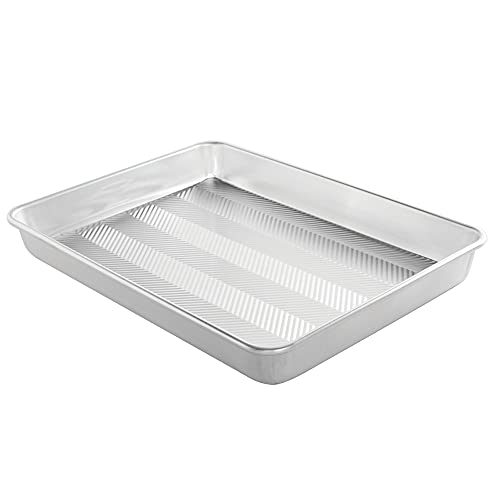
Best for professional-sized baking and higher-capacity recipes, the Prism pan emphasizes improved airflow for crisping and an extra-durable design. Natural aluminum provides reliable heat conduction for even results, while the high sides accommodate bigger brownie towers or double-batch sheet cakes. A potential trade-off is its larger size, which may require a spacious oven. This option is ideal for serious home bakers or small caterers seeking consistent results on large pans.
Restaurantware Met Lux 18x12x2 Inch Pan

Best for precise cake edges and easy release, this straight-sided aluminum pan promotes symmetrical, smooth surfaces ideal for professional-looking sheet cakes. It’s oven-ready up to 390F, enabling even browning across the full sheet. The greaseproof design helps release the cake cleanly, reducing slicing mess. A limitation is that it’s optimized for standard sheet cake dimensions; unusual fillings might require extra trimming. Choose this when you want bakery-grade edges with reliable release.
Nordic Ware Natural High Sided Sheet Pan

Best for long-lasting durability and versatile baking, this pan uses pure aluminum for excellent heat distribution and a tall side to handle large batches. The reinforced encapsulated steel rim helps prevent warping, and the included storage lid keeps baked goods fresh. A caution: pure aluminum requires careful handling to prevent dents if dropped. This pan suits cooks who bake frequent sheet cakes, bars, and casseroles with consistent results over years.
Wilton Aluminum 9×13 Inch Pan

Best for everyday baking and reliable heating, this 9×13 inch pan uses natural anodized aluminum for durability and rust-resistance. Even heating distribution reduces hot spots, contributing to uniform cakes and brownies. It is PFAS-free, aligning with safer baking materials. A best-for caveat: this pan is smaller than the truly large sheet sizes and may not satisfy large celebration needs. Choose it for routine sheet cakes and standard brownie pans with dependable performance.
Wilton Easy Layers Sheet Cake Pan Set

Best for layered sheet cakes, this two-piece steel pan set helps you assemble layered desserts with ease. The non-stick coating promotes easy release and quick cleanup, while the scratch-resistant surface supports repeated use. Limitations include the need to manage two pans during stacking; this is best for bakers who frequently create multi-layered sheet cakes with fillings between layers. Choose this when you want a simple workflow for layered desserts.
Spmarkt Black Sheet Cake Pan With Lid

Best for transportable bakes and potlucks, this 15x10x2 inch pan includes a snap-on lid with a built-in carry handle. It’s 2 inches deep, offering plenty of room for frosting and toppings without hitting the lid. The ceramic nonstick coating provides easy release and cleanup, and it’s free from PFOA, PTFE, and PFAS. A caveat: hand washing is recommended to preserve the coating. Choose this when you need a secure lid for on-the-go baking and delivery.
Buying Guide: Key Considerations For Your Sheet Cake Pan
- Pan size and capacity: Match the pan to your typical batch size and oven space. Larger pans suit gatherings; smaller pans fit everyday baking.
- Material and heat distribution: Aluminum pans offer even heating and durability, while anodized finishes resist rust and wear.
- Edge design: Straight sides create clean edges for decorating; rounded edges may be easier to release but harder to decorate evenly.
- Release and cleaning: Nonstick or greaseproof coatings simplify removal and cleanup, but avoid abrasive cleaners that can wear coatings.
- Lids and portability: Lidded pans protect layers during transport; be mindful of lid clearance in ovens or bags for delivery.
- Durability and care: Some pans resist warping with reinforced rims; consider storage needs and potential dishwasher compatibility.
Frequently Asked Questions
- What size sheet cake pan is best for a 12-inch cake?
– For a 12-inch diameter cake, consider a 12×18 inch sheet pan for generous batter and frosting space, depending on the recipe. - Are aluminum pans safe for high-heat baking?
– Yes, high-quality aluminum pans distribute heat well, but follow manufacturer guidelines for maximum temperatures. - Do 2-inch deep pans bake more evenly than standard depth?
– They can help with tall layer cakes and thick frostings, reducing overflow, though baking results also depend on recipe and oven performance. - Is PFAS-free coating important for sheet pans?
– PFAS-free coatings reduce exposure to certain chemicals; choose PFAS-free options when possible for safer everyday baking.