Whether you’re deboning, chunking bones, or slicing through dense meat, a high quality meat cleaver delivers power, precision, and reliability. This guide highlights five top cleavers that pair durability with sharpness, making them ideal for home kitchens and professional setups alike. The buyers most likely to benefit are professional cooks, home chefs who handle bone-in joints, and anyone seeking a versatile, long-lasting chopping tool.
| Product | Brand | Why It Stands Out |
|---|---|---|
| Mueller 7-Inch Meat Cleaver | MUELLER HOME | Laser-tested German steel, full-tang handle, versatile bone chopper |
| HOSHANHO Cleaver Knife 7 Inch | HOSHANHO | Japanese steel, ultra-sharp 15° edge, durable for heavy-duty tasks |
| imarku 7 Inch Meat Cleaver | imarku | Precision forged Japanese steel, ergonomic handle, multi-purpose |
| PAUDIN Cleaver Knife 7 Inch | PAUDIN | High-carbon stainless steel, 15° edge, strong edge retention |
| Kitory Meat Cleaver | Kitory | Massive axe-shape blade, heavy-duty for big bones |
Mueller 7-Inch Meat Cleaver Butcher Knife

The Mueller cleaver features a laser-tested German high-carbon steel edge, hand-sharpened to an 18° double-bevel on both sides for durable, razor-like performance. It handles poultry, beef brisket, pork ribs, and dense vegetables with less chipping risk. The seamless stainless steel handle offers a secure, comfortable grip, reducing fatigue during long prep sessions and it’s dishwasher safe for easy cleanup. Best for professional kitchens and serious home cooks who need one knife that can chop, slice, and scoop. Caution: routine cleaning is advised to maintain the blade’s finish and edge.
HOSHANHO Cleaver Knife 7 Inch

This HOSHANHO cleaver uses a precisely forged Japanese steel design with a 15° edge on each side and a hardness up to 58+2 HRC for strength and edge retention. Its ergonomic handle promotes comfortable control during long prep sessions. Best for cooks who want a razor-sharp, long-lasting blade capable of slicing through bones and tough cuts with minimal effort. Choose this if you prefer a lightweight yet sturdy Japanese-style cleaver; avoid if you need a heavier, axe-like weight distribution for very large bones.
imarku Cleaver Knife 7 Inch

Imarku’s 7-inch cleaver is forged from premium Japanese high-carbon stainless steel, delivering hardness around 57±1 HRC. The blade is hand-sharpened to 15° on both sides for precise cuts and reliable edge retention. An ergonomic handle supports comfortable, controlled use, making it suitable for daily kitchen tasks from chopping to deboning. Best for cooks who want a versatile, sharp, easy-to-maintain cleaver; consider other models if you need a heavier bone-chopping tool for very dense cuts.
PAUDIN Cleaver Knife 7 Inch

PAUDIN’s 7-inch cleaver uses high-carbon stainless steel with a Rockwell hardness of 56+, delivering strong edge retention and easy maintenance. The blade is sharpened to a 15° angle on each side, providing efficient cutting through meat, cartilage, and large vegetables, while the blade’s design supports deboning and portioning tasks. Best for value-focused buyers who want reliable edge performance; avoid if you frequently work with ultra-dense bones that demand a heavier, thicker back blade.
Kitory Meat Cleaver
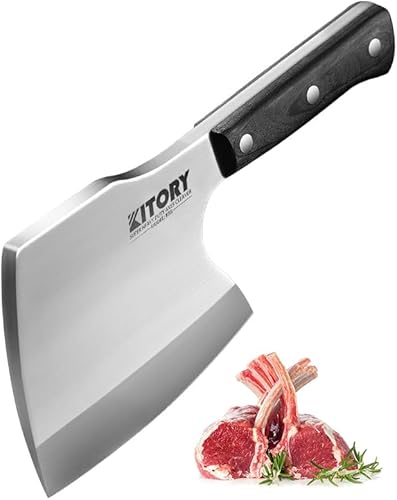
The Kitory cleaver adopts a massive axe-shape blade designed for heavy-duty cutting. The 7cr18mov steel offers hardness up to 60 HRC with a traditional quenching process that enhances durability. The pakkawood handle provides a secure, triple-riveted grip for stability during tough chops. Best for users who regularly handle large meat bones or frozen sections and need a blade that can withstand repeated, forceful blows. Use caution with lighter tasks, as the weight and shape may be less maneuverable for delicate prep.
Buying Guide: Key Purchase Considerations
- Blade material and hardness: Higher hardness (HRC) generally means sharper edges and longer edge retention, but may affect toughness. Look for high-carbon stainless steel for balance.
- Edge geometry: Cleavers with a 15° to 18° double-bevel provide clean cuts with less resistance. Consider whether you prefer a traditional Western bevel or a more acute angle for precise slicing.
- Blade thickness and weight: A thicker blade improves bone-cutting capability but can be tiring. Lighter models suit everyday kitchen tasks; heavier axes excel at heavy-duty chopping.
- Handle design: Full tang, ergonomic grip, and dishwasher safety are important for longevity and comfort, especially during long prep sessions.
- Maintenance: Some blades resist rust and staining, while others require more careful drying and care after washing. Consider your cleaning habits when choosing.
- Versatility: If you want a single knife that handles deboning, slicing, and chopping, look for a multi-purpose cleaver with a wide blade and a robust tip for scoring and detailing.
Frequently Asked Questions
- What makes a cleaver high quality?
– A high-quality cleaver combines a durable blade, solid edge retention, and a comfortable, secure grip, allowing safe, efficient bone and meat work. - Is a heavier cleaver better for bones?
– Heavier, axe-like cleavers provide power for dense bones but require more control; lighter cleavers are versatile for daily prep. - Should I choose Japanese or German steel?
– German steels often emphasize toughness and edge retention; Japanese steels focus on hardness and precision. Both can be high quality when properly tempered. - How important is edge angle?
– Edge angles around 15°-18° per side offer clean cuts but can be susceptible to chipping if misused on dense bones; a slightly wider angle adds durability. - Can these cleavers be dishwasher-safe?
– Some are labeled dishwasher safe, but hand washing extends blade life and prevents corrosion or handle damage. - What should I consider for maintenance?
– Dry blades thoroughly, oil if necessary, and re-sharpen as needed using proper sharpening tools to maintain edge integrity.