Find the right forks for your front loader or skid steer with this practical guide. These clamp-on pallet forks are designed to expand your loader’s capabilities for lifting pallets, logs, hay bales, and other heavy materials. The best picks below emphasize strong construction, secure clamping, and adjustable stabilizers to keep loads steady. This guide is ideal for farmers, landscapers, and hobbyists who want reliable performance without permanent mounting.
Summary of chosen products:
- VEVOR Pallet Forks, 60″ Total Length, 4000 lbs Clamp-On — heavy-duty option with adjustable stabilizer bar and reinforced fasteners.
- VEVOR Pallet Forks, 60″ Clamp-On for Tractor Bucket — strong locking system and wide adjustment range for stability.
- VEVOR 43″ Clamp On Pallet Forks — compact 2000 lb capacity, quick installation for smaller jobs.
- YINTATECH 60″ Clamp On Pallet Forks — 2000 lb capacity, coated steel for durability, fast one-minute clamp-on/off.
- VEVOR Pallet Forks, 2000 Lbs Clamp On 43″ — sturdy, adjustable stabilizer bar for moderate loads.
VEVOR Pallet Forks 60-Inch, 4000 Lbs Clamp-On

Best for heavy-duty daily use where maximum load stability matters. This model uses square steel tubing to resist bending and a reinforced bolt system to reduce slipping. The adjustable stabilizer bar can be set between 19.5″ and 36″, helping keep heavy pallets aligned during loading and transport. Best for farms, construction yards, and large-area projects that demand high lift capacity. Caution: ensure proper attachment and follow all safety guidelines when handling loads near capacity.
Who this is best for
- Farmers needing frequent pallet handling of heavy goods
- Landscapers and contractors working with heavy materials on uneven terrain
VEVOR Pallet Forks 60″ Clamp-On for Tractor Bucket

Best for versatility and secure clamping on tractor buckets. This model uses four Grade 8.8 bolts and a pressure pad to reduce slippage, with an adjustable stabilizer bar spanning 19.7–36 inches. It’s a solid choice for farm tasks, yard work, and loader upgrades where secure grip and alignment are critical. Limitation: delivery may place the stabilizer bar inside the fork tubes; check before installation.
Who this is best for
- Users needing strong clamping force for heavy or shifting loads
- Owners who frequently switch between different bucket widths
VEVOR 43″ Clamp On Pallet Forks — 2000 Lbs
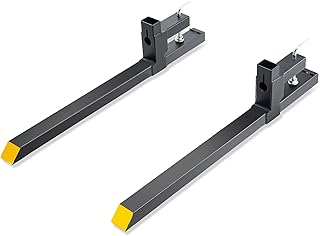
Best for lighter, everyday tasks where maximum portability matters. With a 2000 lb capacity and square steel tubing, these forks offer dependable performance for routine loading, unloading, and material handling. They feature reinforced bolts and screws for stability and are easy to install by sliding over the bucket edge and clamping down. Caution: not ideal for exceptionally heavy or dense loads beyond its 2000 lb rating.
Who this is best for
- Homeowners with smaller tractors or loaders
- Users primarily handling pallets, wood, or garden materials
YINTATECH 60″ Clamp On Pallet Forks

Best for universal compatibility and value. The forks lift up to 2000 lbs and feature coated heavy-duty steel and reinforced rollback protection slots to secure loads. The quick one-minute clamp-on/off design suits users who need fast setup for frequent tasks. Limitations: compatibility is best with bucket lips under 2.48 inches, so confirm lip width before purchase.
Who this is best for
- Ranchers, rural homesteads, and hobby farmers
- People who need fast attachment/detachment without tools
VEVOR Pallet Forks 2000 Lbs Clamp On (43″)

Best for lighter-to-moderate loads where adjustable stabilization is useful. This model emphasizes a strong, durable frame and a stabilizer bar that helps keep the forks aligned under heavy work. A potential limitation is the 2000 lb rating, which may be insufficient for the heaviest pallets or dense materials. Choose this if your typical loads stay within mid-range capacity.
Buying Guide: Forks For Front Loader And Skid Steer
- Load capacity: Match the fork capacity to your typical loads. Heavier pallets, logs, or dense materials require higher capacity (2000–4000 lbs) to avoid bending or failure.
- Attachment method: Clamp-on forks are removable and versatile but ensure bucket lip compatibility and secure clamping. Quick-on/off designs save time for multi-task operations.
- Stabilizer bar: An adjustable stabilizer bar helps keep forks aligned under load, reducing side pressure and load shift. Consider bar length range that fits your typical bucket width and load geometry.
- Construction quality: Look for square steel tubing and reinforced bolts or ribs. These features improve durability, reduce wear, and extend service life in harsh farm or yard conditions.
- Compatibility and fit: Confirm bucket lip width, lip style, and mounting compatibility with your loader. Some models specify lip width or require specific bucket lip dimensions.
- Installation effort: Quick-clamp designs simplify changeovers, especially for users who need to swap attachments regularly. Plan for the minimal tool requirements and safe operation practices.
- Usage scenarios: For heavy, repetitive lifting, prioritize higher capacity and robust locking systems. For occasional light-duty tasks, a smaller model may offer better portability and cost efficiency.
Frequently Asked Questions
- Q: Do clamp-on pallet forks fit all loaders? A: Most clamp-on forks fit a wide range of loader buckets, but lip width and mounting style vary. Check the product’s compatibility notes.
- Q: Can I use these forks for loose materials like soil or gravel? A: They are designed for pallets, logs, and similar loads. Use caution and verify load stability for loose or shifting materials.
- Q: What is stabilizer bar and why is it important? A: The stabilizer bar helps keep forks aligned under heavy loads, reducing load tilt and side pressure for safer handling.
- Q: How do I install clamp-on forks? A: Most models slide over the bucket lip and are secured with bolts or a clamping mechanism. Follow the manufacturer’s instructions for proper installation.
- Q: Can I leave forks attached during transport? A: It’s generally recommended to detach when not in use to avoid interference with other equipment or safety issues.
- Q: What maintenance do these forks require? A: Regularly check bolts, screws, and welds for tightness and wear. Clean to prevent rust and inspect stabilizer bars for proper operation.